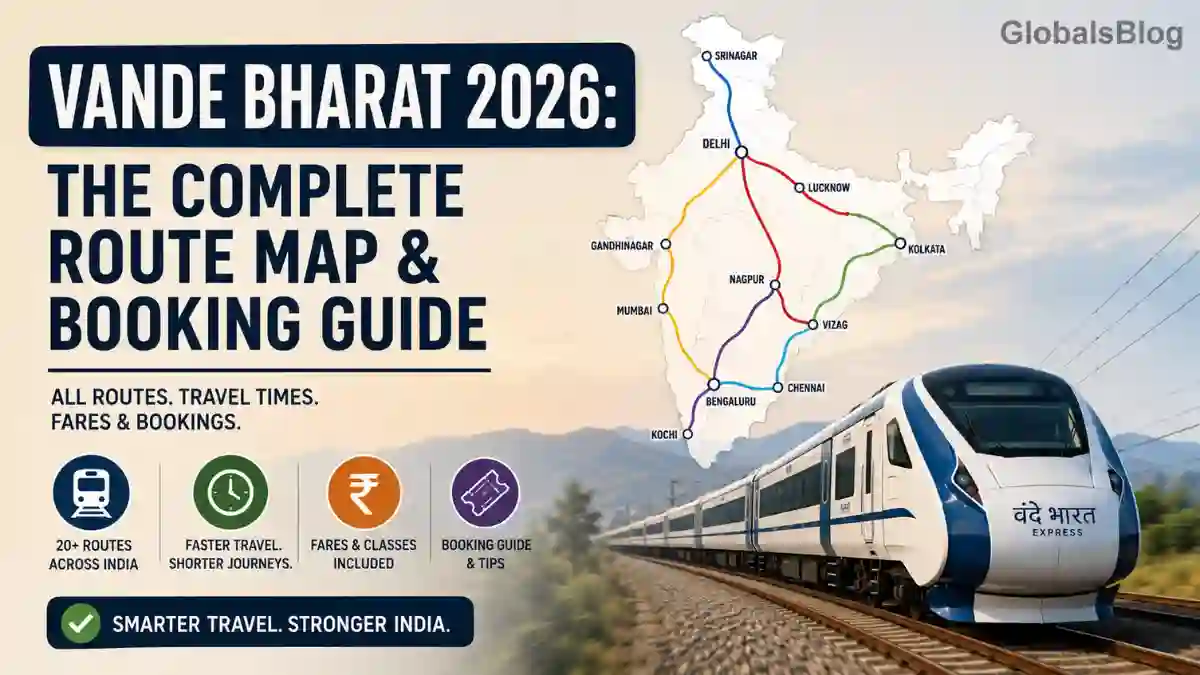
20+ operational routes, 48-hour journeys cut to 16–24 hours. Here is every Vande Bharat route, real travel times, seat availability, fares, and how to book with confidence.
What Is Vande Bharat & Why Should You Care?
- Vande Bharat (VB) is a semi-high-speed train: Not bullet-train fast (like Shanghai or Japan), but significantly faster than Indian Railways' traditional express trains. Designed for speed on existing gauge tracks.
- It cuts journey times by 25–35%: Delhi–Mumbai drops from 23 hours to 15.5 hours. Delhi–Kolkata drops from 28 hours to 18 hours. That's meaningful time savings for working professionals and families.
- Fares are 15–20% higher than traditional trains: A Delhi–Mumbai Rajdhani Express costs ₹2,500–3,500 (AC 2-tier). Vande Bharat costs ₹3,000–4,500. The premium is modest for the time saved.
- 20+ routes are now operational: All major metro-to-metro corridors (Delhi–Mumbai, Delhi–Kolkata, Chennai–Delhi, Mumbai–Bengaluru, etc.) have VB service. Tier-2 cities are getting added regularly.
- Seats are harder to find than traditional trains: Lower capacity + higher demand = faster sellouts. Booking within 30 days of departure is critical.
The VB Impact by Numbers: ₹200–500 extra per ticket vs traditional trains. 6–10 hours saved per long-distance journey. 80%+ on-time record (vs 65–70% on traditional trains). Seats book out 25–30 days before departure on premium routes. That's the Vande Bharat reality in 2026.
All Vande Bharat Routes Operational in May 2026
India's busiest route. Books out 30+ days in advance. Departs 3 PM, arrives 6:45 AM next day.
Eastern corridor. Moderate demand vs Mumbai route. Good seat availability 15–25 days out.
South's flagship. Fewer services = tighter bookings. Book 25+ days ahead to guarantee seats.
Western corridor. High corporate demand. Extreme seat crunch on weekdays.
Short-haul regional service. Easiest to book. Premium shuttle alternative to flights.
Weekend leisure traffic. Afternoon/evening departures are reliable. Cheaper than flight + cab.
South-corridor expansion. Growing business demand. Moderate booking pressure.
Holiday corridor. Weekend departures sell out instantly. Weekday travel is easier.
Emerging metro connection. Lower hype than Mumbai route = better seat availability.
South's second metro. Less demand than Chennai route. Realistic booking window: 20 days.
Note: New routes are added regularly (typically quarterly). This list covers routes operational as of May 2026. For real-time additions, check IRCTC.co.in under "Vande Bharat Express" in your preferred route's search results.
Vande Bharat vs Traditional Trains: The Honest Comparison
| Aspect | Vande Bharat Express | Rajdhani/Shatabdi Express | Superfast Express |
|---|---|---|---|
| Average Speed | 80–93 km/h | 75–85 km/h | 55–65 km/h |
| Delhi–Mumbai Journey | 15.5 hours | 17 hours (Rajdhani) | 23–28 hours (Express) |
| Comfort Level | High (modern design) | High (established) | Standard (aging fleet) |
| AC 2-Tier Fare (Delhi–Mumbai) | ₹3,200–4,500 | ₹2,500–3,500 | ₹1,500–2,200 |
| Seat Availability | Books out 25–30 days | Books out 20–25 days | Easier availability |
| On-Time Performance | 80%+ on-time | 75–80% on-time | 65–70% on-time |
| Onboard Amenities | USB ports, Wi-Fi, better catering | Standard pantry | Basic pantry |
| Booking Window | Opens 120 days in advance | Opens 60 days in advance | Opens 60 days in advance |
| Best For | Time-conscious professionals | Budget-conscious travelers | Price-first budget travelers |
How To Book Vande Bharat: A Step-by-Step Strategy
Real-World Vande Bharat Experience: Travel Tips That Matter
- Arrive 45 minutes early at the station. VB trains run on schedule — they leave on time. Missing a departure is your loss; no compensation.
- Seating is tighter than Rajdhani. Legroom is adequate but not spacious. Aisle seats are less cramped if long legs are an issue.
- Wi-Fi works but is slower than expected. Download entertainment before boarding. Streaming video is unreliable. Use it for messaging and browsing only.
- Onboard pantry is decent but not exceptional. Food costs ₹100–300 per item. Bring snacks if picky. Coffee and chai are available 24/7.
- USB ports at every seat are clutch. This is VB's biggest practical advantage over traditional trains. Charge your phone throughout the journey.
- Night travel is smoother on VB vs superfast trains. The newer suspension means fewer jerks and jolts during sleep. Earplugs still recommended.
- Toilets are cleaner and better maintained than traditional trains. No surprises here — just expected standards met.
- Attendants are more attentive. If you need help, they respond faster than traditional trains. Service is professional but not premium.
Which Vande Bharat Route Should You Actually Take?
Best for Speed Gain: Delhi ↔ Mumbai
Saves 7.5 hours vs traditional trains (23 → 15.5 hours). If you value time, this is the highest ROI. Premium worth it for one-way business travel. Weekend leisure trips: consider if price doesn't matter.
Best Value: Delhi ↔ Chandigarh or Jaipur
Shorter routes mean lower fares (₹800–1,200). You're paying 10–15% premium for a 30–40% speed advantage. These routes have the best fare-to-benefit ratio.
Best for Comfort: Mumbai ↔ Bengaluru
14.5-hour journey feels fast. Overnight trip feels less exhausting. Good meal service. Modern train with full amenities. Reasonable premium for the experience.
Best Avoided (Unless Necessary): Hyderabad ↔ Delhi
22-hour journey with only 5–6 hours saved vs traditional express. Premium isn't justified for the time gain. Unless you have specific reasons, book Rajdhani or superfast express instead.
"Vande Bharat changed long-distance travel in India — not revolutionized it, but genuinely improved it. The 2026 network finally covers routes that matter. For anyone doing regular long-distance travel, VB isn't a luxury anymore; it's the smart default." — Industry perspective on Vande Bharat's market positioning in 2026
Future Vande Bharat Expansion (What's Coming)
As of May 2026, Indian Railways has announced plans for Vande Bharat routes to Lucknow, Indore, Surat, and secondary metros by year-end. The expansion is accelerating. New routes typically start with 2–3 services per week before ramping to daily service.
Track this expansion via IRCTC's official announcements. New routes often have lower demand initially, making them easier to book. If you have flexibility, newer routes offer better seat availability than established Delhi–Mumbai or Mumbai–Bengaluru services.
Related Vande Bharat Guides
The Vande Bharat Decision: Is It Worth Your ₹500–1,000 Premium?
For journeys over 12 hours where you value time, yes. The 25–35% journey time reduction is genuine. Comfort is meaningfully better than superfast trains. On-time performance is higher, meaning you arrive when promised.
For journeys under 6 hours or pure budget travel, skip it. Chandigarh/Jaipur short-hauls are exceptions — the premium is small enough to justify the speed. But if you're comparing ₹1,200 Rajdhani to ₹4,500 VB on a long route, Rajdhani still wins on value.
The Vande Bharat network in May 2026 is the best version yet — 20+ routes, reliable service, genuine time savings. Book 120 days ahead, lock in your seat, and experience the train that finally made Indian Railways feel modern. You'll arrive fresher, better rested, and actually on time.
Leave a comment
Share a quick thought about this story.
Thanks for sharing your view. It is ready for review.
Please try again in a moment.