Travel
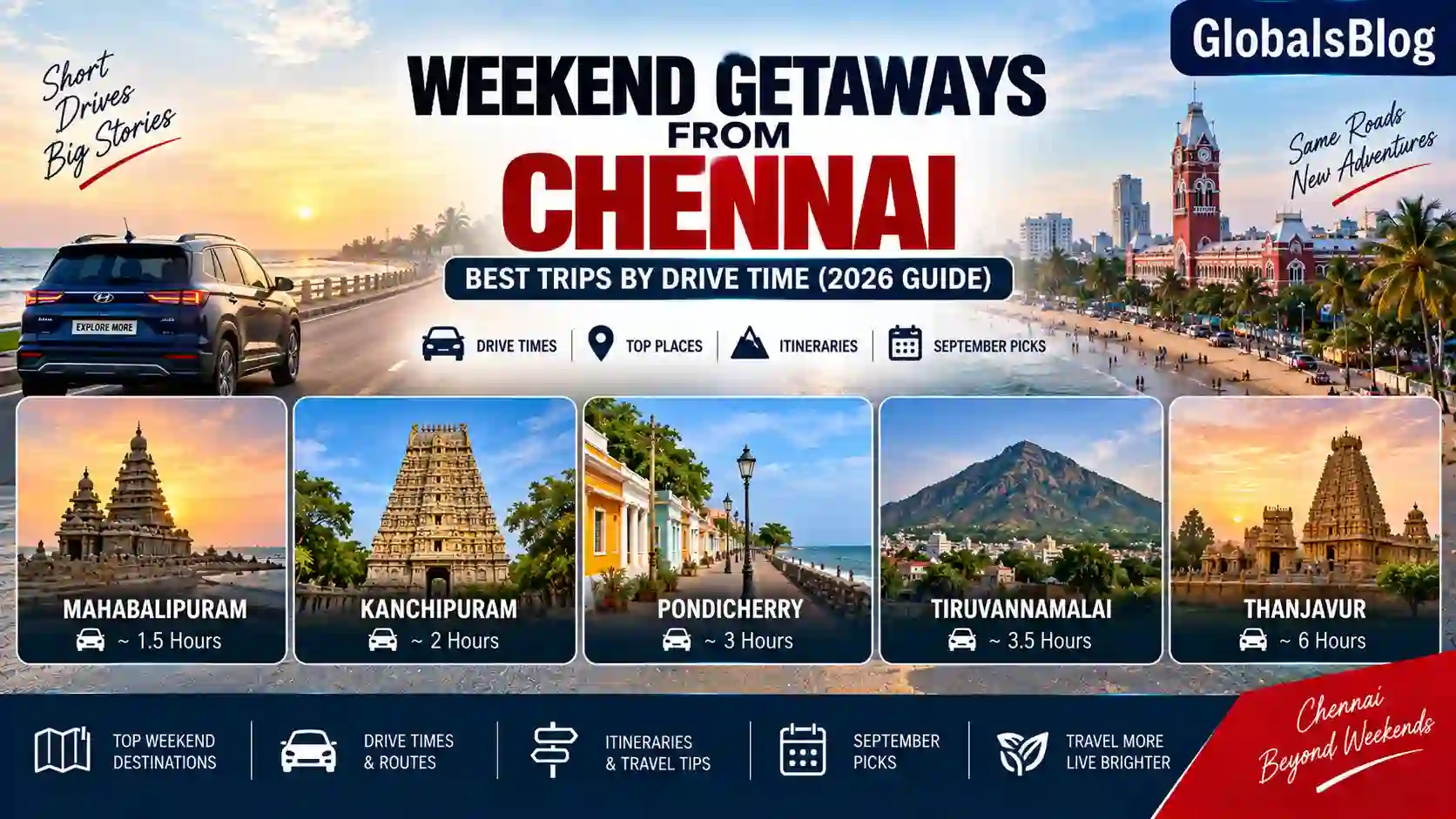
Weekend Getaways from Chennai — Best Trips by Drive Time (2026 Guide)
Best weekend getaways from Chennai 2026 — Mahabalipuram, Kanchipuram, Pondicherry, Tiruvannamalai, Thanjavur with drive times, ECR route guide and September picks.
Fresh stories across travel, auto, and beauty.
Calculate the full cost of your self-drive adventure — fuel, tolls, accommodation, food, and activities — with a clear per-person breakdown for any group size.
India's highway network has transformed dramatically in the last decade. With expressways, well-maintained national highways, and stunning scenic routes, self-drive road trips are now more accessible — and enjoyable — than ever. The key to a great road trip is knowing your numbers before you leave the driveway.
| Route | Total Distance | Fuel Cost (14 km/L) | Recommended Days |
|---|---|---|---|
| Mumbai → Goa (NH 66, coastal) | 1,200 km RT | ~₹8,740 | 6–7 days |
| Delhi → Rajasthan circuit | 1,400 km loop | ~₹10,200 | 8–10 days |
| Bengaluru → Coorg → Ooty | 900 km loop | ~₹6,550 | 5–6 days |
| Manali → Leh | 950 km RT | ~₹6,900 | 7–9 days |
| Delhi → Agra → Varanasi | 1,100 km RT | ~₹8,000 | 6–7 days |
| Pune → Mahabaleshwar → Kolhapur | 450 km loop | ~₹3,280 | 3–4 days |
The biggest advantage of a road trip over other travel is that the major fixed costs (fuel + toll) are shared across all passengers. A solo driver pays the full fuel cost; four friends split it equally. This means road trips become progressively cheaper per person the more people you travel with — up to the car's capacity.
A complete road trip budget includes: fuel (the biggest variable), toll charges (₹150–1,200+ depending on the highway), accommodation (₹800–5,000/room/night), food (₹400–1,500/person/day), activities and entry fees (₹200–1,000/person/day), and an emergency buffer (keep ₹3,000–5,000 extra for breakdowns or unexpected stops).
Fuel cost = (Total distance ÷ Mileage) × Fuel price per litre. Example: A 1,200 km round trip in a car giving 14 km/L at ₹102/L costs (1,200 ÷ 14) × 102 = ₹8,743. Remember to account for highway driving being slightly more efficient than city driving (higher mileage on highways for most cars).
Top road trips in India: (1) Manali–Leh Highway (476 km, stunning Himalayan landscape, open May–Oct). (2) Mumbai to Goa via NH 66 (600 km, coastal beauty). (3) Delhi to Rajasthan Circuit (Jaipur, Jodhpur, Jaisalmer — ~1,200 km loop). (4) Bengaluru to Coorg and Ooty (450 km, coffee estates and hill stations). (5) Spiti Valley Circuit from Shimla (450 km, extreme terrain, open May–Oct).
You need: valid driving licence, vehicle registration certificate (RC), vehicle insurance (third-party at minimum, comprehensive recommended), pollution under control (PUC) certificate, and FASTag linked to the vehicle. For some national parks and wildlife sanctuaries, you may need to obtain specific permits. The Leh-Ladakh highway requires Inner Line Permits for certain zones.
Mumbai to Goa is approximately 600 km (one way) via NH 66. For a return trip of 1,200 km in a car giving 14 km/L at ₹102/L: fuel = (1,200 ÷ 14) × 102 ≈ ₹8,743. Add toll charges of approximately ₹600–800 (FASTag). Total vehicle running cost for the trip: ₹9,300–9,600.
Essential road trip emergency items: spare tyre (and jack, wheel spanner), jumper cables, basic toolkit, tyre inflation pump (12V), emergency reflective triangles, first aid kit, water (4–6 litres), power bank, car charger, physical maps of the route (mobile signal is unreliable in remote areas), and a list of roadside assistance numbers for your insurance provider.
From Our Blog
Inspiring road trip routes, packing lists, highway driving tips, and the best self-drive destinations in India.
Best weekend getaways from Chennai 2026 — Mahabalipuram, Kanchipuram, Pondicherry, Tiruvannamalai, Thanjavur with drive times, ECR route guide and September picks.

Best weekend getaways from Hyderabad 2026 — Bhongir, Warangal, Nagarjunakonda, Gandikota, Srisailam and Hampi with drive times, September picks and complete itineraries.

Complete Rajasthan travel guide 2026 — best places to visit, Jaipur, Jodhpur, Jaisalmer, Udaipur, Pushkar. Itineraries, best season October–February, budget guide and city comparisons.