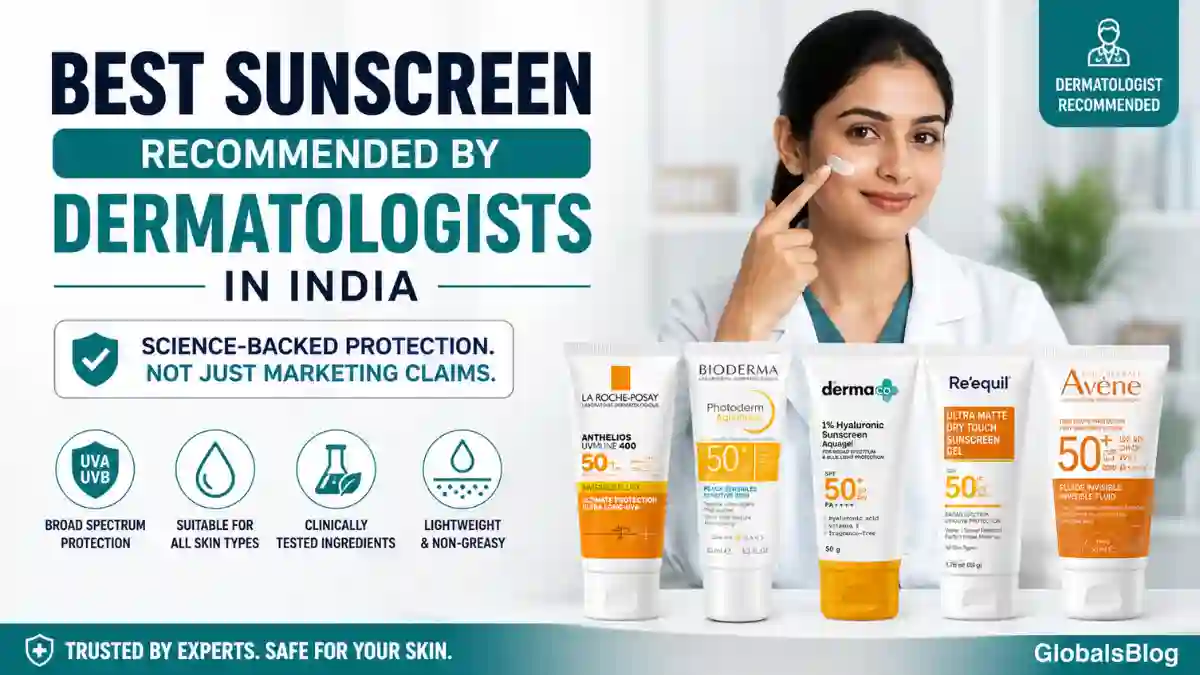
Every brand claims dermatologist approval. Almost none of them name an actual dermatologist.
A reader once forwarded us a sunscreen ad that said "dermatologist recommended" in bold letters across the bottle. We asked her to find which dermatologist. She could not, and neither could the brand's customer support when she called. That single exchange is why this guide exists — to separate the products genuinely built on dermatological evidence from the ones simply borrowing the phrase.
Sunscreens genuinely recommended by Indian dermatologists include La Roche-Posay Anthelios, Cetaphil Sun SPF 50, Re'equil range for oily and acne-prone skin, Neutrogena Ultra Sheer, and Minimalist SPF 50 PA++++. The common thread across all dermatologist-endorsed picks is broad-spectrum protection (UVA and UVB), PA++++ rating, non-comedogenic formulation, and fragrance-free options for sensitive skin — not a brand logo or marketing claim.
What "Dermatologist Recommended" Actually Means — And What It Doesn't
This phrase has become almost meaningless through overuse. In India, there is no regulatory requirement to substantiate a "dermatologist recommended" claim on cosmetic packaging — brands can print it without naming a single dermatologist, without any clinical study, and without any verification process at all.
Genuine dermatologist endorsement looks different from marketing claims, and the difference is checkable. A real dermatologist-backed product typically has published ingredient rationale, is frequently mentioned by name by actual practising dermatologists in interviews or on professional platforms, and avoids ingredients that dermatologists have specifically flagged as problematic for Indian skin — heavy fragrance, certain alcohols in high concentration, and comedogenic oils in sunscreen formulas meant for acne-prone skin.
The Indian Association of Dermatologists, Venereologists and Leprologists (IADVL) has published sun protection guidelines that most credible dermatologist recommendations trace back to, even if indirectly. Looking for products that align with these — broad-spectrum coverage, adequate PA rating, suitable texture for the skin type — is a more reliable filter than the words printed on the box.
The Three Things Dermatologists Actually Check
First, broad-spectrum protection covering both UVA and UVB — UVB causes sunburn, UVA causes deeper skin damage and ageing, and Indian sun delivers both intensely year-round. Second, a PA rating of at least PA+++ , ideally PA++++, since the PA scale specifically measures UVA protection strength which the SPF number alone does not capture. Third, a formulation suited to the actual skin type being treated — a dermatologist will never recommend the same sunscreen for severely oily acne-prone skin and for dry eczema-prone skin, because the formulation needs differ significantly.
Sunscreens Genuinely Backed by Dermatological Criteria
La Roche-Posay's Anthelios range is the most frequently referenced sunscreen brand in Indian dermatology consultations and professional skincare communities, largely due to its Mexoryl filter technology offering genuinely strong, photostable UVA protection. The brand''s thermal spring water base is also dermatologically studied for its soothing properties on sensitive and post-procedure skin, making it a frequent recommendation after treatments like chemical peels or laser sessions. At approximately ₹1,500 for 50ml it sits at the premium end, but dermatologists frequently note it as their go-to recommendation for patients with reactive or compromised skin barriers.
Cetaphil''s sun range carries the same dermatology pedigree as its cleansers — non-comedogenic, fragrance-free, and formulated specifically to minimise irritation risk on already-compromised skin. Indian dermatologists frequently recommend it as a default option for patients undergoing active acne treatment, since several acne medications increase sun sensitivity significantly. We have heard from multiple readers that their dermatologist specifically wrote "Cetaphil Sun" on a prescription pad rather than a generic instruction to "use sunscreen" — a meaningful signal of genuine clinical trust rather than casual recommendation.
Re'equil is genuinely different from most Indian skincare brands in that it was founded with direct dermatologist involvement in formulation, rather than retroactively seeking dermatologist endorsement for marketing. The brand''s entire sunscreen range — Oil-Free Matte, Silicone-Free, and the broader SPF lineup — is built around addressing specific Indian skin concerns that generic international formulas often miss, like high humidity oil control and reducing white cast on medium-to-deep skin tones. The Silicone-Free variant specifically addresses a formulation choice many dermatologists flag for acne-prone patients, since silicones can trap sebum and contribute to congestion. Check our best sunscreen for oily skin guide for the full Re'equil range comparison.
Neutrogena has maintained dermatologist trust in India for over a decade specifically because the Ultra Sheer formula has remained consistent and well-documented, rather than constantly reformulating with trend-driven ingredients. Its dry-touch finish technology genuinely reduces the oily feel that makes patients abandon sunscreen, addressing a real adherence problem dermatologists see constantly — patients prescribed sunscreen who stop using it within weeks because of texture discomfort. At ₹349 for 88ml, its accessibility and consistent reliability make it a common default recommendation, particularly for first-time sunscreen users who need something straightforward.
Minimalist has built its entire brand identity around ingredient transparency — listing exact concentrations of active ingredients rather than vague marketing terms, which is precisely the kind of transparency dermatologists appreciate when evaluating a product for patient recommendations. The hybrid filter system balances effective UV protection with a wearable, non-greasy finish that performs well across normal to oily skin types. At ₹399 for 50ml it offers genuinely strong performance at a price point accessible to most Indian buyers, which matters for adherence — the best sunscreen is the one patients can afford to use consistently.
Dermatologist Sunscreen Recommendations — By Skin Type
A genuine dermatologist consultation never gives a single universal sunscreen answer — the recommendation always depends on the skin condition being treated. Here is how that translates across the most common skin types Indian dermatologists see daily.
| Skin Type | Key Requirement | Top Pick | Avoid | Verdict |
|---|---|---|---|---|
| Oily / Acne-Prone | Non-comedogenic, oil-free | Re'equil Oil-Free Matte | Heavy creams, silicones | Strong Match |
| Dry / Sensitive | Hydrating, fragrance-free | La Roche-Posay Anthelios | High-alcohol gels | Strong Match |
| Post-Procedure | Soothing, zero fragrance | Cetaphil Sun SPF 50 | Chemical-heavy actives | Strong Match |
| Normal / Combination | Balanced, broad-spectrum | Minimalist SPF 50 | Overly drying mattes | Good Match |
| First-Time User | Simple, reliable, accessible | Neutrogena Ultra Sheer | Complex multi-step actives | Good Match |
Notice that price does not correlate with dermatological suitability in this table — the ₹349 Neutrogena and the ₹1,500 La Roche-Posay both earn genuine recommendations, just for different patient profiles. This is exactly how a real dermatologist consultation works: matching formulation to need, not matching price to perceived quality.
The Honest Problem With Sunscreen Marketing in India
Here is the opinion we will not soften: most "dermatologist recommended" claims on Indian sunscreen packaging are unverifiable marketing copy, not genuine clinical endorsement. A product can legally print this phrase without a single named dermatologist standing behind it, and the vast majority of brands using this language never disclose who recommended it or under what criteria.
This does not mean every product claiming the phrase is bad — several genuinely good sunscreens on this list do use similar marketing language. The point is that the phrase itself tells you nothing reliable. What actually tells you something is the ingredient list, the PA rating, and whether the formulation matches your specific skin concern — not whether the word "dermatologist" appears on the front of the bottle.
And honestly — if a brand's only proof point is the phrase itself with no further detail, that absence of specificity is itself a signal worth noticing.
How to Verify a Genuine Dermatologist Recommendation
- Check if the brand names a specific dermatologist or clinical study — vague claims with no attribution are a weaker signal
- Look for PA+++ or PA++++ rating specifically, not just a high SPF number — SPF alone does not measure UVA protection
- Search for the product name alongside "dermatologist" on professional platforms to see if real practitioners discuss it independently
- Prioritise non-comedogenic and fragrance-free labelling for acne-prone or sensitive skin, regardless of brand marketing claims
- If you have an actual dermatologist, ask them directly rather than relying on packaging claims — this remains the most reliable verification method
Sunscreen Mistakes Even "Recommended" Products Can't Fix
- Buying the right product but applying too little — A reader once used a genuinely excellent dermatologist-grade sunscreen but applied a pea-sized amount instead of the recommended half teaspoon. Her sunburn complaints continued despite using a perfectly good product. The application amount matters as much as the product choice.
- Trusting the "dermatologist recommended" label without checking PA rating or ingredient suitability for your specific skin type
- Skipping reapplication every 2-3 hours during actual sun exposure, regardless of how strong the initial application was
- Assuming a higher price automatically means better dermatological suitability — our comparison table above shows this is simply not true
⚠️ Disclaimer: This article is for educational and product review purposes only. All recommendations are based on cosmetic use, ingredient analysis, and publicly available dermatological guidelines — not personalised medical advice. If you have a diagnosed skin condition, please consult a certified dermatologist directly for product recommendations specific to your case.
Check the Ingredients, Not the Claim on the Bottle
"Dermatologist recommended" is a phrase, not a guarantee. The PA rating, the ingredient list, and whether the formula matches your skin type tell you far more than any words printed on packaging. Use the comparison table above to match your skin concern to a genuinely suitable pick.
Indian dermatologists frequently recommend La Roche-Posay Anthelios for sensitive and post-procedure skin, Cetaphil Sun SPF 50 for acne treatment patients, and Re'equil's range for oily and acne-prone Indian skin specifically. The common thread is broad-spectrum protection, PA++++ rating, and non-comedogenic formulation matched to the patient's specific skin concern rather than a single universal recommendation.
Not automatically. There is no regulatory requirement in India for brands to substantiate this claim with a named dermatologist or clinical study before printing it on packaging. A more reliable approach is checking the PA rating, ingredient list, and whether independent dermatologists discuss the product on professional platforms, rather than trusting the label claim alone.
Indian dermatologists generally recommend a minimum SPF 30 for daily indoor-heavy days and SPF 50 for regular outdoor exposure, paired with a PA+++ or PA++++ rating for adequate UVA protection. The PA rating is particularly important in India given year-round high UV intensity, and is often overlooked compared to the more commonly discussed SPF number.
Cetaphil Sun is frequently recommended for acne treatment patients because it is non-comedogenic and fragrance-free, reducing irritation risk on skin already compromised by topical acne medications. Many acne treatments increase sun sensitivity significantly, making a gentle, reliable sunscreen a critical part of the treatment plan rather than an optional addition.
It depends on skin type and tone. For medium to deep Indian skin tones, dermatologists often favour chemical or hybrid filters since pure mineral sunscreens with high zinc oxide content can leave a visible white or grey cast. For very sensitive or reactive skin, a low-percentage mineral component combined with gentle chemical filters, as seen in several recommended products on this list, often provides the best balance of protection and comfort.
Reader Experiences