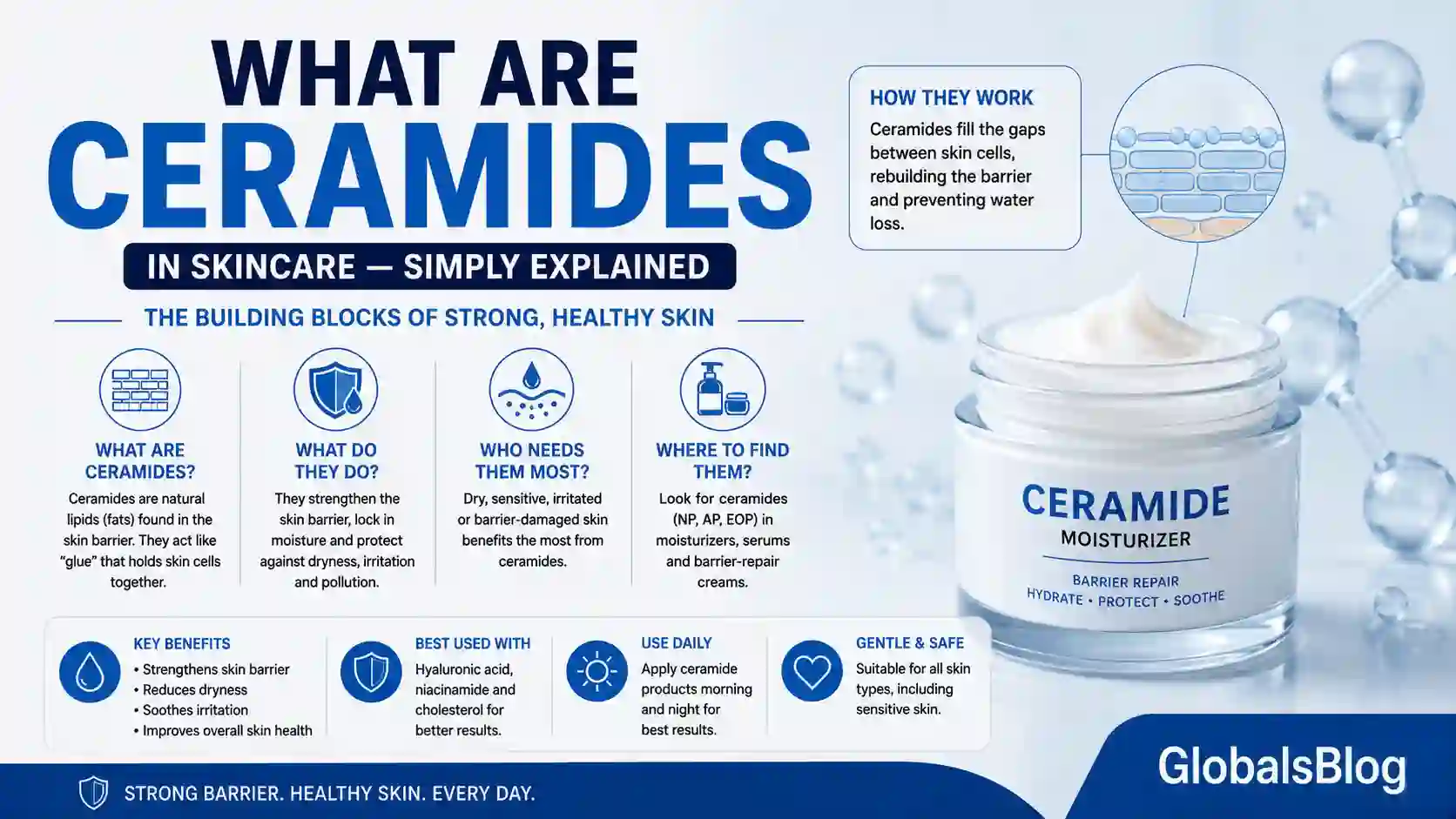
Ceramides are the reason your skin stays intact. Without them, everything else in your skincare routine works harder than it should.
A reader from Delhi had dry, sensitive skin that reacted to almost every new product she tried — redness, tightness, occasional flaking. Her dermatologist told her the issue was not her skin type but her skin barrier. Years of harsh cleansing, over-exfoliation, and skipping moisturiser had depleted the ceramide content in her outer skin layer. She had been treating symptoms while the cause — a compromised barrier — remained unaddressed. Six weeks of ceramide-rich moisturiser used consistently, and the sensitivity that had plagued her for three years reduced dramatically. Her skin had not changed. Its ability to protect itself had been restored.
Ceramides are lipid (fat) molecules that make up approximately 50% of the skin's outer barrier layer. They act like the mortar between skin cells — holding them together and preventing moisture from escaping and irritants from entering. When ceramide levels are depleted by ageing, harsh cleansers, over-exfoliation, or environmental stress, the skin barrier weakens — leading to dryness, sensitivity, redness, and increased reactivity. Topical ceramides in moisturisers and serums replenish this barrier, making them one of the most fundamentally important skincare ingredients for dry, sensitive, and compromised skin.
What Ceramides Are — The Brick Wall Analogy
The easiest way to understand ceramides is through the brick wall analogy that dermatologists use. Your skin's outer layer (the stratum corneum) is like a brick wall — skin cells are the bricks, and the lipid matrix surrounding them is the mortar. Ceramides are the dominant component of that mortar, making up approximately 50% of the total lipid content between skin cells.
This mortar performs two critical functions: it prevents water from evaporating out of the skin (keeping skin hydrated from within) and it prevents environmental irritants, allergens, and bacteria from penetrating into the skin. When ceramide levels drop, the mortar thins. Gaps form between the bricks. Water escapes. Irritants get in. The result is the dryness, tightness, sensitivity, and reactivity that people commonly attribute to their "skin type" — when the actual cause is a depleted barrier.
Why Ceramide Levels Drop
Natural ageing reduces ceramide production from around age 30 onward — one of the primary reasons skin becomes drier and more sensitive with age even without lifestyle changes. Harsh cleansers and soaps with high pH strip ceramides from the outer skin layer with repeated use. Over-exfoliation with acids or physical scrubs removes the outer skin layer faster than ceramide synthesis can replenish it. Environmental factors including pollution, cold dry air, and excessive AC exposure all deplete barrier lipids over time. Understanding these causes explains why barrier repair — not just moisture addition — is the correct treatment for chronically dry or sensitive skin.
What Ceramides Do for Skin — The Real Benefits
Topical ceramides applied in moisturisers and serums are absorbed into the outer skin layer and integrate into the existing lipid matrix, directly replenishing depleted barrier lipids. This is fundamentally different from humectants like hyaluronic acid (which attract water to the skin surface) or occlusives like petroleum jelly (which seal moisture in) — ceramides actually repair the structural component of the barrier rather than just supplementing moisture temporarily. For the Delhi reader with chronically compromised barrier, ceramide replenishment addressed the structural cause of her sensitivity rather than just the symptoms.
A repaired ceramide barrier dramatically reduces transepidermal water loss (TEWL) — the rate at which water evaporates from skin. This is why ceramide-rich moisturisers make dry skin feel fundamentally more comfortable over weeks of consistent use rather than just temporarily softened after application. Indian skin in air-conditioned environments specifically experiences high TEWL — office and home AC removes humidity from the air, increasing the rate at which skin loses moisture. Ceramides address this by making the barrier itself more water-retentive rather than just adding more moisture to compensate for what is being lost.
A compromised ceramide barrier allows environmental irritants, fragrance molecules, and allergens to penetrate skin more easily — which is why sensitive skin reacts to products that normal skin handles without issue. By restoring barrier integrity, ceramides reduce this penetration and over time decrease the overall reactivity of skin that has been sensitised by barrier depletion. This explains why many people with "sensitive skin" see dramatic improvement simply from consistent ceramide moisturiser use without any other routine changes — the barrier restoration itself reduces the sensitivity. Our best moisturiser for dry skin guide covers the top ceramide-rich options in India.
A well-maintained ceramide barrier makes skin significantly more tolerant of active ingredients like retinol, vitamin C, and acids. The irritation most people experience with these ingredients is partly caused by them penetrating through a compromised barrier and reaching nerve endings and immune cells that should be protected. Building and maintaining a strong ceramide barrier before introducing actives — and continuing ceramide moisturisers alongside them — reduces the irritation risk significantly. This is why dermatologists consistently recommend ceramide-rich moisturisers as the foundation of any active ingredient routine. Read our retinol beginner guide to see exactly how ceramides support a retinol routine.
Ceramides vs Hyaluronic Acid vs Occlusives — What Each Does
| Ingredient | How It Works | What It Fixes | Best For | Verdict |
|---|---|---|---|---|
| Ceramides | Repairs barrier structure | Compromised barrier, sensitivity | Dry, sensitive, reactive skin | Long-term fix |
| Hyaluronic Acid | Attracts water to skin surface | Surface dehydration | All skin types | Hydration boost |
| Glycerin | Humectant — draws moisture | Surface dryness | All skin types, affordable | Budget hydration |
| Squalane | Occlusive + emollient | Dry surface feel | Dry and normal skin | Good occlusive |
| Petroleum jelly | Seals existing moisture in | Extreme dryness, cracking | Very dry or compromised skin | Emergency repair |
The important takeaway from this table is that ceramides, hyaluronic acid, and occlusives are complementary rather than competing. Hyaluronic acid brings water to the skin. Ceramides keep it there by fixing the barrier. Occlusives add an additional sealing layer on top. Used together in the right order, they address all three dimensions of skin hydration simultaneously.
How to Use Ceramides in Your Routine
-
Apply ceramide moisturiser as your final skincare step before SPF Ceramides work as an occlusive component — applying them last allows them to seal in whatever hydration the preceding steps delivered. Apply after serums and before SPF in the morning routine.
-
Use morning and evening for maximum barrier restoration Barrier repair is cumulative — consistent twice-daily application delivers meaningfully faster barrier restoration than once-daily use. Ceramide night creams and day moisturisers both serve the same fundamental function.
-
Pair with niacinamide for enhanced barrier support Niacinamide independently stimulates the skin's own ceramide synthesis — a complementary mechanism that combines well with topical ceramide application. Our niacinamide benefits guide explains this barrier-strengthening mechanism in detail.
-
Use ceramide moisturiser alongside retinol to buffer irritation Apply ceramide moisturiser immediately after retinol (or use the sandwich method — moisturiser before and after retinol) to buffer penetration and reduce irritation while maintaining barrier integrity during the retinol adjustment period.
Ceramide Tips for Indian Skin
- Look for ceramides listed in the first 10 ingredients — if they appear near the bottom of a long ingredient list, the concentration is likely too low to be meaningful
- Check for NP, AP, or EOP suffixes on ceramide listings — these are specific ceramide types with different barrier functions, and products with multiple ceramide types provide more complete barrier support
- Pair with niacinamide for the most comprehensive barrier support — niacinamide stimulates your skin's own ceramide production while topical ceramides replenish what is already depleted
- Use consistently for 6-8 weeks before evaluating — barrier restoration is gradual and cumulative, not immediate
- Our best moisturiser for dry skin guide covers the top ceramide-rich Indian and international formulas at every price point
- If you have been using harsh cleansers or over-exfoliating, stop both before adding ceramides — continuing the cause while treating the symptom will not produce results
Ceramide Mistakes to Avoid
- Treating barrier damage symptoms without fixing the cause — The Delhi reader at the start of this article had been applying various hydrating products for years without improvement because she was still using a harsh soap-based cleanser and over-exfoliating. Ceramide topicals cannot fully repair a barrier that is being simultaneously damaged by the cleansing routine.
- Choosing products with ceramides listed very late in the ingredient list — position in the ingredient list indicates concentration, and ceramides need to be at meaningful levels to provide actual barrier benefit
- Expecting immediate results — barrier restoration takes 4-8 weeks of consistent daily use, not overnight
- Skipping ceramides when using retinol or acids assuming they are "not necessary" for oily skin — barrier support is beneficial for all skin types, not just dry skin
- Using ceramide products alone without also addressing habits that deplete ceramides — harsh cleansers, hot water, and over-exfoliation will continue undoing what ceramide moisturisers are building
💡 The Foundation Rule: Ceramides are not a treatment product — they are foundational maintenance. Like cleaning teeth before whitening them, the barrier must be functional before any active ingredient can work at its full potential. Build the foundation before adding the actives.
Fix the Barrier First. Everything Else Works Better After.
Ceramides are the mortar between skin cells. Without them, moisture escapes and irritants get in. With consistent topical replenishment alongside habits that stop depleting them, even chronically dry or sensitive skin can restore meaningful barrier function over 6-8 weeks. Build this foundation and every other skincare ingredient — vitamin C, niacinamide, retinol — performs closer to its potential.
Ceramides are lipid molecules that make up approximately 50% of the outer skin barrier layer. They act like the mortar between skin cells, preventing moisture from evaporating out of the skin and stopping irritants and allergens from penetrating in. When ceramide levels are depleted by ageing, harsh cleansers, or over-exfoliation, the skin barrier weakens, leading to dryness, sensitivity, and increased reactivity. Topical ceramides replenish this barrier, making them one of the most fundamentally important skincare ingredients for dry, sensitive, and compromised skin.
Yes — ceramides are one of the most effective ingredients specifically for sensitive skin. Much skin sensitivity is caused by a compromised barrier that allows irritants and allergens to penetrate more easily than they should. Topical ceramides repair this barrier, reducing penetration of irritants over time and decreasing the overall reactivity of sensitised skin. Many people with chronically sensitive skin see significant improvement from consistent ceramide moisturiser use within 6-8 weeks without any other routine changes.
Ceramides and hyaluronic acid address hydration through different mechanisms. Hyaluronic acid is a humectant that attracts water to the skin surface, providing immediate plumping and surface hydration. Ceramides repair the structural barrier that retains that moisture — without a functioning barrier, hyaluronic acid hydration evaporates quickly. They work best together: hyaluronic acid applied first brings water to skin, ceramide moisturiser applied after seals it in by repairing the barrier through which it would otherwise escape.
Yes — oily skin benefits from ceramides, though it needs lighter ceramide formulations than dry skin. Oiliness refers to excess sebum production and is unrelated to barrier ceramide content — oily skin can simultaneously have a depleted ceramide barrier and experience dryness or sensitivity alongside the oiliness. Lightweight ceramide serums or gel-based ceramide moisturisers provide barrier support without adding surface oiliness. Ceramide sunscreens, covered in our dry skin sunscreen guide, are particularly useful for oily skin that needs barrier support without a heavy cream base.
Ceramide barrier restoration is gradual and cumulative rather than immediate. Surface skin softness and reduced tightness are often noticeable within 1-2 weeks of consistent twice-daily use. Meaningful reduction in sensitivity and reactivity typically takes 4-8 weeks. Full barrier restoration in chronically compromised skin can take 3-4 months of consistent daily use alongside stopping the habits — harsh cleansers, over-exfoliation — that were depleting ceramides in the first place.
Reader Experiences