Most people pick car insurance based on the cheapest premium. That is exactly the wrong way to choose.
A reader from Indore filed his first car insurance claim after a minor accident and discovered his "great deal" insurer had a claim settlement ratio under 85% and a painfully slow process that took six weeks to resolve. His neighbour, paying roughly the same premium with a different insurer, had his claim settled in four days. The premium difference between the two policies was less than ₹800 a year. The service difference was enormous.
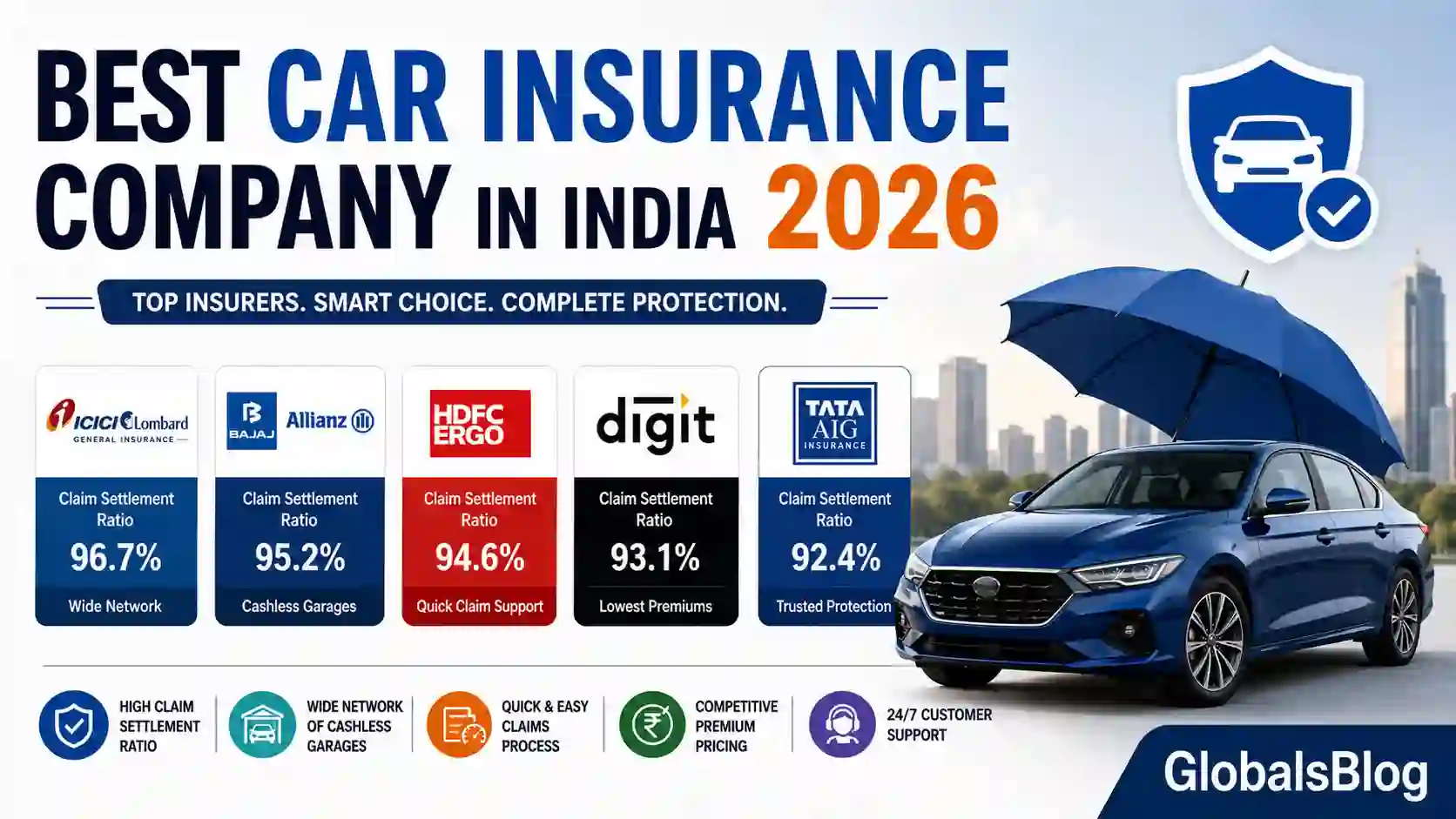
The best car insurance companies in India in 2026 are HDFC ERGO, ICICI Lombard, Bajaj Allianz, Tata AIG, and Go Digit. HDFC ERGO and ICICI Lombard consistently lead on claim settlement ratio and network garage coverage, making them the strongest overall picks. Go Digit stands out for fully digital claims processing, while Bajaj Allianz offers the widest network garage reach for buyers outside major metros.
Why Premium Price Is the Wrong First Filter
Car insurance comparison websites and most buyers default to sorting by premium price — lowest first. This is genuinely the wrong starting point. Insurance is a product you hope to never use intensively, but when you do need it — after an accident, theft, or major damage — the quality of that experience matters enormously more than the few hundred rupees saved on premium.
Claim settlement ratio is the single most important metric, and it is the one most buyers never check. This figure, published annually by IRDAI, shows what percentage of claims an insurer actually settles versus rejects or disputes. A 5-10% difference in claim settlement ratio between two similarly priced insurers represents a genuinely meaningful difference in whether you will actually get paid when something goes wrong.
What Actually Matters When Choosing Car Insurance
Four things matter more than premium price. First, claim settlement ratio — check the latest IRDAI annual report figures, not just an insurer's own marketing claims. Second, network garage coverage in your specific city — cashless repair only works if a quality network garage exists near you. Third, claim process speed and digital convenience — how quickly and easily you can actually file and track a claim. Fourth, add-on cover quality — zero depreciation, engine protection, and roadside assistance vary significantly in actual usefulness across insurers despite similar naming.
Best Car Insurance Companies in India 2026 — Top 5 Ranked
HDFC ERGO consistently ranks among the highest claim settlement ratios in the Indian car insurance market, backed by a genuinely extensive network garage presence across both metro and tier-2 cities. The claims process has matured significantly with strong digital tools — photo-based assessment for minor damage has cut resolution time meaningfully compared to older paperwork-heavy processes. Their zero depreciation add-on is competitively priced and genuinely comprehensive, covering plastic and rubber parts that some competitors exclude in fine print. For buyers wanting the single most reliable all-round choice without extensive comparison shopping, HDFC ERGO remains the safest default recommendation.
ICICI Lombard has invested heavily in digital claims infrastructure, and it genuinely shows in practice — the mobile app allows policy management, claim filing, and garage location entirely without phone calls or branch visits for most straightforward claims. Their claim settlement ratio sits consistently in the top tier alongside HDFC ERGO, and the insurer's instant policy issuance for new car purchases removes a common point of friction at dealerships. For tech-comfortable buyers who want to manage their entire insurance relationship digitally, ICICI Lombard delivers the smoothest experience among major insurers.
Bajaj Allianz's genuine strength lies in network garage depth beyond major metros — for buyers in tier-2 and tier-3 cities, this often translates into a meaningfully better cashless repair experience than insurers with metro-concentrated networks. The insurer maintains solid claim settlement performance while offering competitively priced add-ons, particularly their engine protection cover which has become increasingly relevant given India's monsoon-related waterlogging damage claims. For buyers outside the major 8-10 Indian cities specifically, Bajaj Allianz frequently delivers a more practical real-world experience than higher-ranked metro-focused competitors.
Tata AIG has built a genuinely strong reputation for comprehensive add-on coverage quality, particularly their return-to-invoice cover which pays the original purchase price rather than depreciated value in total loss situations — a meaningful difference for newer car owners. Their claim process maintains solid speed and the insurer has shown consistent improvement in customer satisfaction metrics over recent years. For buyers specifically prioritising maximum protection through add-ons over pure premium minimisation, Tata AIG's combination of core policy reliability and strong optional coverage makes it a genuinely competitive choice.
Go Digit built its entire business model around digital-first, paperless insurance, and the claims experience reflects this genuinely well — self-inspection through the app for minor damage, rapid approval, and a notably transparent pricing structure without the hidden complexity some traditional insurers carry. As a relatively newer insurer, the network garage count trails the established players, but coverage in major cities is solid and growing. For younger, tech-comfortable buyers specifically who value transparency and speed over the brand recognition of older insurers, Go Digit offers a genuinely differentiated experience worth considering.
Car Insurance Company Comparison
| Insurer | Claim Ratio | Network Garages | Best For | Verdict |
|---|---|---|---|---|
| HDFC ERGO | 95%+ | 7,000+ | Overall reliability | Best Overall |
| ICICI Lombard | 94%+ | 6,500+ | Digital management | Best Digital |
| Bajaj Allianz | 92%+ | 8,000+ | Tier-2/3 cities | Best Network Reach |
| Tata AIG | 91%+ | 6,000+ | Add-on coverage | Best Add-Ons |
| Go Digit | 90%+ | 4,500+ | Digital-native buyers | Best Paperless |
Notice that the difference between the top and bottom of this list on claim settlement ratio is roughly 5 percentage points — that may sound small, but on a large enough customer base it represents thousands of policyholders whose claims were handled differently based purely on insurer choice.
How to Actually Choose Your Car Insurance
-
Check the latest IRDAI claim settlement ratio data directly Do not rely solely on an insurer's own marketing claims about their claim settlement performance. IRDAI publishes annual data that gives a more objective comparison across all major insurers.
-
Verify network garage coverage specifically in your city A nationally impressive garage count means little if the nearest cashless option to your home or workplace is genuinely far away. Check the insurer's garage locator for your specific pin code before deciding.
-
Set your IDV (Insured Declared Value) accurately — understand exactly what IDV means — not minimally Some buyers reduce IDV to lower premium, not realising this directly reduces their claim payout in a total loss scenario. Set IDV close to your car's genuine current market value rather than artificially lowering it to save on premium.
-
Add zero depreciation cover for cars under 5 years old Standard claims deduct depreciation on parts, which can meaningfully reduce your payout. Zero depreciation add-on costs more but removes this deduction, and is genuinely worth it for newer cars where parts replacement cost is higher.
-
Compare actual quotes annually, not just at first purchase Insurance pricing and insurer performance can shift year to year. Re-comparing at renewal rather than auto-renewing with the same insurer by default can reveal better options as your car ages and your needs change.
The Honest Take — Cheapest Premium Is Often the Worst Decision
Here is the opinion we will not soften: choosing car insurance based primarily on the lowest quoted premium is one of the most common and costly mistakes Indian car owners make. The reader from Indore at the start of this article saved roughly ₹800 annually by choosing the cheaper insurer — and then lost weeks of his time and significant frustration when his claim took six weeks to settle versus his neighbour's four days.
Insurance is fundamentally a service product you are buying for the moment things go wrong — and that is precisely the moment where claim settlement ratio, garage network quality, and process speed matter far more than the premium difference you noticed at purchase. A ₹500-1,000 annual premium saving rarely justifies meaningfully worse claims service when you actually need to file one.
Tips for Choosing Car Insurance in India
- Always check the latest IRDAI claim settlement ratio data rather than trusting insurer marketing claims alone
- Verify cashless network garage coverage specifically for your city and neighbourhood before committing to an insurer
- Set your IDV close to actual current market value rather than artificially lowering it to reduce premium
- Add zero depreciation cover for cars under 5 years old — the additional premium is typically well worth it for genuine claim value
- Read add-on cover terms carefully — engine protection and zero depreciation coverage details vary meaningfully between insurers despite similar naming
- Re-compare insurers at each renewal rather than auto-renewing by default, since pricing and service quality shift year to year
Car Insurance Mistakes Indian Buyers Make
- Choosing purely on lowest premium without checking claim settlement ratio — The Indore reader's experience at the start of this article is a textbook example. The ₹800 annual saving cost him significant time and stress when he actually needed to file a claim.
- Reducing IDV to lower premium without understanding this directly reduces total-loss claim payout
- Skipping zero depreciation cover on newer cars to save premium, then facing significant out-of-pocket cost on parts replacement during a claim
- Not verifying network garage coverage in their specific area before assuming cashless repair will be convenient
- Auto-renewing with the same insurer year after year without comparing whether better options have emerged
⚠️ Disclaimer: This article is for informational purposes only and does not constitute financial or insurance advice. Claim settlement ratios and network garage figures are based on recent publicly available data and may change. Always verify current figures directly with IRDAI and individual insurers, and consult a licensed insurance advisor for guidance specific to your situation before purchasing a policy.
Choose for Claims Day, Not Purchase Day
HDFC ERGO and ICICI Lombard lead on overall reliability and claim settlement performance. Bajaj Allianz wins on network reach outside metros. Whatever you choose, check the claim settlement ratio first — that single number tells you more about your future experience than any premium comparison ever will.
HDFC ERGO and ICICI Lombard are consistently the best overall car insurance companies in India, leading on claim settlement ratio and network garage coverage. HDFC ERGO offers the strongest all-round reliability, while ICICI Lombard provides the smoothest fully digital claims experience. Bajaj Allianz is the better choice specifically for buyers outside major metro cities due to its wider tier-2/3 city network.
Claim settlement ratio is the percentage of claims an insurer actually approves and pays out, published annually by IRDAI. It matters because a higher ratio indicates the insurer is more likely to honour your claim without disputes or rejections. A 5-10% difference between insurers can represent a meaningful difference in whether you actually get paid when you need to file a claim, making it more important than premium price alone.
No, this is one of the most common car insurance mistakes in India. The cheapest premium often comes from insurers with lower claim settlement ratios or weaker network garage coverage, meaning you may save a small amount annually but face significant difficulty when you actually need to file a claim. Prioritise claim settlement ratio and network garage coverage in your city first, then compare premium among insurers that meet those standards.
Zero depreciation cover removes the standard depreciation deduction insurers apply to parts during a claim, meaning you receive the full repair cost rather than a depreciated amount. It is genuinely worth the additional premium for cars under 5 years old, where parts replacement costs are higher and the depreciation deduction would otherwise meaningfully reduce your claim payout.
Yes, you can switch car insurance companies at any policy renewal without losing your No Claim Bonus, which is transferable between insurers with proper documentation. Comparing quotes and insurer performance at each renewal rather than auto-renewing by default is a good practice, since pricing and claim settlement performance can shift meaningfully year to year across the industry.
Reader Experiences