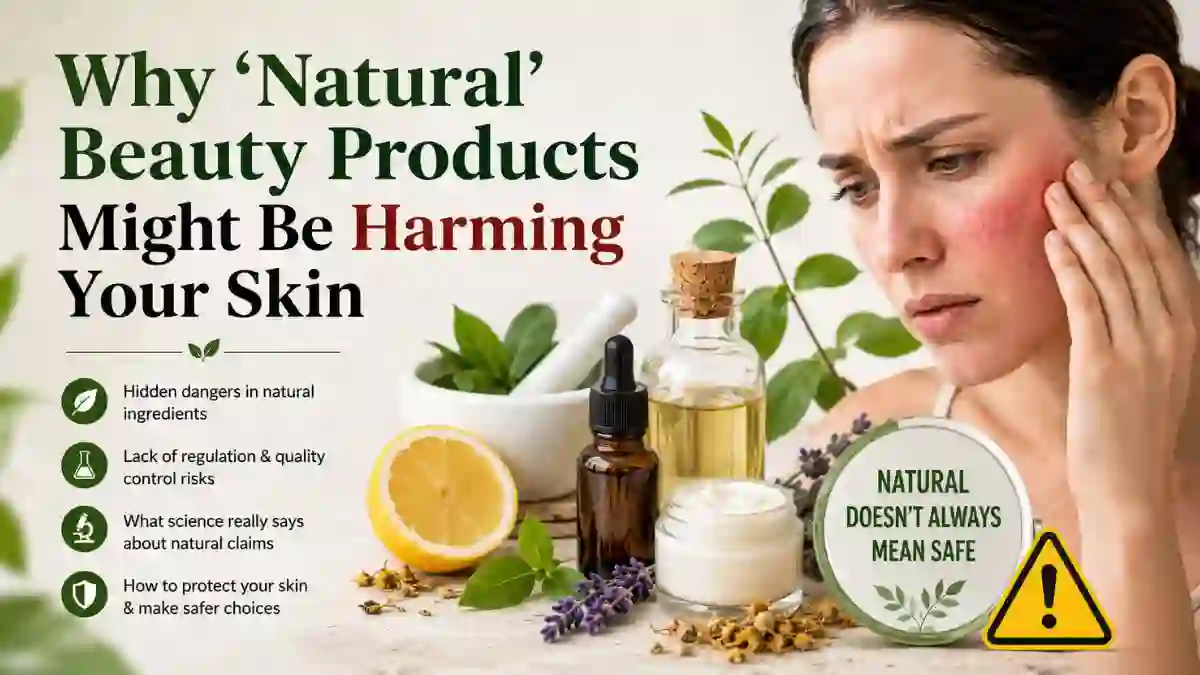
Many people believe natural beauty products are automatically safer and gentler for their skin, but this assumption can lead to unexpected irritation, allergic reactions, and long-term skin damage.
Natural beauty products might be harming your skin in ways you never expected. We'll explore why popular natural ingredients like essential oils and botanical extracts can trigger serious skin reactions, and how the lack of standardized testing in the natural beauty industry puts your skin at risk.
Common Misconceptions About Natural Beauty Products
The "Natural Equals Safe" Myth
The biggest myth in skincare is that anything labeled "natural" is automatically safer. Poison ivy is natural. So are stinging nettles. Yet both can cause severe skin reactions.
Molecules don’t care about their origin. Whether natural or synthetic, they behave the same on your skin.
Organic Doesn’t Mean Skin-Friendly
- Organic doesn’t mean allergen-free
- Organic doesn’t mean non-irritating
- Organic doesn’t guarantee proper preservation
- Organic doesn’t ensure pH balance
Misleading Marketing Tactics
- Fear-mongering about "chemicals"
- Buzzwords like "clean" and "pure"
- Hidden synthetic ingredients
- Cherry-picked research
Hidden Dangers in Popular Natural Ingredients
Essential Oils
Citrus oils can cause photosensitivity and burns. Tea tree oil may trigger dermatitis. Lavender oil contains allergens.
Plant Extracts
Aloe vera, chamomile, and calendula can all cause allergic reactions depending on your sensitivity.
Natural Preservatives
Natural preservatives often require higher concentrations and may increase irritation or bacterial contamination risks.
Fruit Acids
Lemon juice, apple cider vinegar, and pineapple enzymes can cause burns and damage your skin barrier.
Why Natural Products Lack Consistent Quality Control
Unregulated Sourcing
Ingredients may contain pesticides, heavy metals, or toxins due to lack of strict regulations.
Batch Variability
Natural ingredients vary based on weather, soil, and harvesting conditions, leading to unpredictable results.
No Standardization
Harmful compounds can slip through due to lack of universal testing requirements.
Scientific Evidence Against Natural Beauty Claims
Better Performance of Synthetic Ingredients
Synthetic ingredients like vitamin C, retinol, and hyaluronic acid are more stable, effective, and predictable.
Dermatologist Warnings
Dermatologists report increasing cases of irritation caused by essential oils and DIY skincare trends.
Toxic Compounds in Natural Extracts
Ingredients like lavender, comfrey, and arnica contain compounds that may cause allergies or toxicity.
Bacterial Contamination
Many preservative-free natural products contain harmful bacteria and fungi due to lack of proper preservation.
How to Protect Your Skin
Patch Testing
Always test new products on a small skin area for 24–48 hours before full use.
Ingredients to Avoid
- Undiluted essential oils
- Raw fruit acids
- High concentration tea tree oil
- Citrus extracts
Label Reading Tips
- Avoid "proprietary blends"
- Check ingredient concentrations
- Ensure proper preservatives are present
Choose Proven Alternatives
| Skin Concern | Recommended Option | Reason |
|---|---|---|
| Acne | Benzoyl Peroxide | Reliable antibacterial effect |
| Anti-aging | Retinol | Clinically proven results |
| Hydration | Hyaluronic Acid | Consistent moisture retention |
Conclusion
Natural doesn’t guarantee safety. Many natural ingredients can cause irritation, allergies, and long-term damage due to lack of regulation and testing.
Make informed choices: read labels, patch test products, and rely on scientifically proven skincare ingredients.
Leave a comment
Share a quick thought about this story.
Thanks for sharing your view. It is ready for review.
Please try again in a moment.