Chapped lips in Indian summers are not a hydration problem — they are a barrier problem. The right lip balm does not just add moisture. It seals the barrier so moisture stays in. Most lip balms in India do neither properly.
A reader from Ahmedabad described her lips as "chronically chapped regardless of how much water I drink or how many lip balms I use." She had tried six different lip balms in eighteen months — Vaseline, Nivea, Himalaya, a Maybelline tinted balm, a ₹12 local brand from a pharmacy, and a Korean brand she ordered online. None of them made a lasting difference beyond 30–40 minutes. The problem was not the products. It was the application frequency (twice a day versus the four to six times genuinely dry lips need), the habit of licking lips immediately after applying (removes the balm and worsens dryness through saliva evaporation), and — most significantly — the fact that she was using a petroleum jelly-based balm without first hydrating the lips. Petroleum jelly seals what is there; if the lip is already dry, it seals in dryness. This guide covers what actually works for dry and chapped lips in India's climate — and the correct way to use whichever balm you choose.
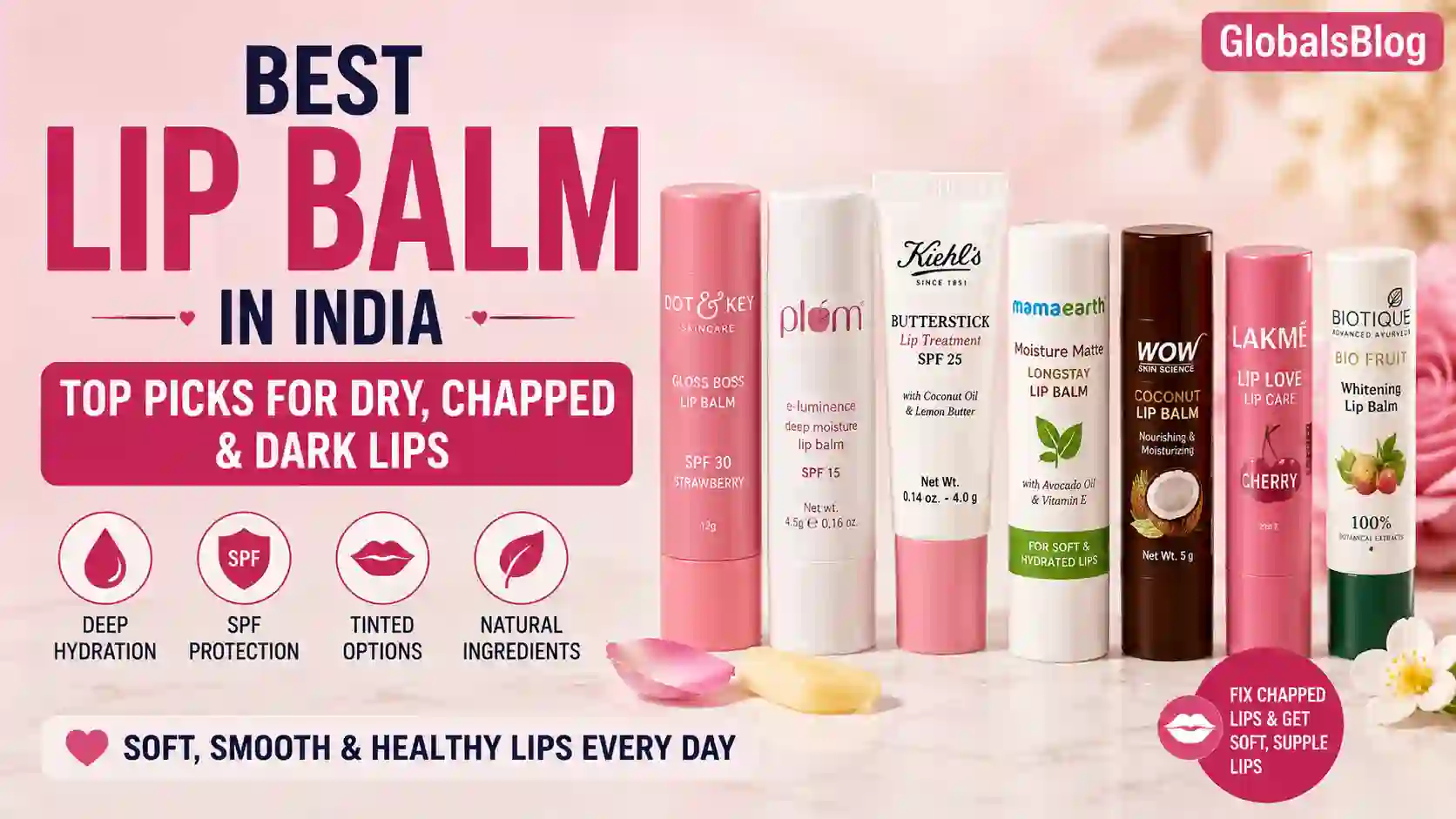
Best lip balms in India: Dot & Key Watermelon Lip Balm (best overall — hyaluronic acid + SPF 30, hydrates and protects), Plum Cocomoist Lip Balm (best budget — coconut oil, vegan, affordable), Kiehl's Lip Balm #1 (best premium — squalane, petroleum, dermatologist recommended), Mamaearth Beetroot Tinted Lip Balm (best tinted — natural colour + SPF), Biotique Bio Fruit Lip Balm (best Ayurvedic — fruit extracts, sulphate-free), WOW Skin Science Lip Balm with Shea Butter (best for severely chapped lips — thick formula, overnight use), and Lakme Lip Love Chapstick (best drugstore pick — widely available, good everyday formula). Apply 4–6 times daily, always on damp lips, never lick lips after applying.
Best Lip Balms in India — Ranked
Dot & Key's Watermelon Lip Balm is the strongest recommendation for everyday lip care in India because it does two things simultaneously that no pharmacy lip balm does: it hydrates (hyaluronic acid draws moisture into the lip tissue) and it protects from UV (SPF 30, meaningful for the Indian sun where UV index regularly exceeds 8). Lip skin has no melanin — the pigment that protects the rest of your face from UV damage — making it uniquely vulnerable to sun damage, darkening, and accelerated dryness in Indian outdoor conditions. An SPF-containing lip balm used during the day is not a luxury; it is the correct tool for Indian sun exposure. The watermelon extract provides mild antioxidant benefit alongside the primary hyaluronic acid hydration. The formula is lightweight enough for daily use without feeling heavy or waxy — a common complaint with petroleum jelly-heavy formulas in India's heat. At ₹249–₹299 for 12g, it is mid-range priced for the active ingredient combination it delivers.
Plum's Cocomoist Lip Balm is the best budget recommendation for everyday lip hydration — a petroleum-free formula using coconut oil, cocoa butter, and vitamin E in a lightweight base that absorbs into the lip without leaving a heavy coating. At ₹99–₹149 for 4.5g, it is one of the most affordable quality lip balms available in India. The coconut oil base provides genuine emollient benefit (softening and smoothing the lip surface) while the cocoa butter adds a mild occlusive barrier. The formula is 100% vegan and free from animal-derived ingredients — relevant for a growing segment of Indian buyers who specifically seek this. Plum's Cocomoist is gentle enough for sensitive lips and is one of the few affordable lip balms with a transparent ingredient list that doesn't include mineral oil or petrolatum as the primary agent. Best used during the day for casual everyday hydration; for severely chapped lips, a thicker formula or overnight treatment is more appropriate.
Kiehl's Lip Balm #1 has been in continuous production since 1969 and is one of the most universally recommended lip balms by dermatologists globally — the formula uses petroleum (as an occlusive barrier), squalane (a lightweight skin-identical emollient from olive or sugarcane), and sweet almond oil (vitamin E-rich emollient) in a balanced combination that addresses both the sealing and the softening functions simultaneously. The petroleum in this formula is cosmetic-grade and highly refined — not the same as the petroleum jelly from a pharmacy tub, though both provide barrier function. At ₹950–₹1,100 for 15ml, it is genuinely expensive for a lip balm by Indian market standards. The justification: it is the most consistently effective formula available in India for people with chronically dry or severely chapped lips, and one tube lasts 3–4 months with regular use. For buyers with persistent lip dryness who have tried multiple cheaper options without success, the Kiehl's Lip Balm #1 is the single most reliable step up.
Mamaearth's Beetroot Tinted Lip Balm addresses the most common Indian lip balm use case after pure moisturisation: natural, everyday colour with lip care built in. The beetroot extract provides a MLBB (My Lips But Better) pink-red tint that works across a wide range of Indian skin tones — more colour than a clear balm but not as opaque as a lipstick, making it appropriate for everyday use without visible makeup. The formula includes SPF 20 (some UV protection, though SPF 30+ is preferred for strong sun exposure), shea butter (emollient and softening), and vitamin E. At ₹149–₹199 for 4.5g, it is excellent value for a tinted SPF lip balm — the combination of colour, care, and sun protection in one product eliminates a step for buyers who otherwise layer clear balm under a tinted product. The colour payoff is subtle enough to be appropriate for professional settings while adding visible warmth to the lips. Available in multiple shades (beetroot, peach, strawberry, rose).
The WOW Skin Science Shea Butter Lip Balm is the most appropriate recommendation for severely chapped, peeling, or cracked lips — situations where a lightweight everyday balm is insufficient. The formula uses a high concentration of shea butter (one of the richest natural emollients, with a fatty acid profile that closely matches human skin lipids) alongside beeswax (strong occlusive barrier) and vitamin E. The thick, waxy texture means it stays on the lips for significantly longer than lighter formulas — making it ideal as an overnight treatment (applied generously before bed, allows 6–8 hours of uninterrupted moisture sealing while you sleep) or for acute dryness episodes during the monsoon transition or winter months. At ₹199–₹249 for 10g, it is good value for the intensity of the formula. Not recommended as an all-day carry product — the thick texture is not suited to frequent reapplication throughout the day. Use at night or for intensive repair periods of 5–7 days.
Lakme Lip Love is the most widely available quality lip balm in India — found in every supermarket, pharmacy, Nykaa, and general store across the country including Tier 2 and Tier 3 cities. The formula includes SPF 15 (some UV protection), shea butter, and a range of flavours (cherry, strawberry, apricot, watermelon) that make it pleasant for everyday use. At ₹99–₹149 for 4.5g, it is accessible budget pricing with better ingredient quality than the most basic pharmacy alternatives. The SPF 15 is lower than ideal for Indian sun conditions (SPF 30+ is the recommended minimum for outdoor use in India) but provides meaningful protection for primarily indoor users or those in lower UV intensity situations. For buyers who want a widely available, affordable, and reliably good everyday lip balm that can be found in any Indian city, Lakme Lip Love is the most practical recommendation — it may not be the best ingredient profile on this list but it is the most accessible quality option nationwide.
Biotique Bio Fruit Lip Balm is the strongest Ayurvedic-positioned lip balm available in India — using fruit extracts (papaya, white lily), wheat germ oil, and almond oil in a formula with SPF 25 that addresses both hydration and UV protection without synthetic preservatives. The SPF 25 is a strong point — higher than most drugstore alternatives and meaningful for Indian sun exposure. At ₹70–₹90 for 12g, it is the most affordable SPF-containing lip balm on this list and delivers genuine value for buyers who specifically want a natural ingredient positioning. The formula is also available in a saffron and honey variant (traditionally used in Ayurvedic lip care for lightening darker lip pigmentation over time — the evidence base is not strong but the ingredients are benign). For buyers in smaller cities who want an Ayurvedic formulation with SPF at a low price point, Biotique Bio Fruit is the most practical recommendation in this category.
Best Lip Balm in India — Comparison Table
| Lip Balm | Price | SPF | Key Active | Tinted | Best For |
|---|---|---|---|---|---|
| Dot & Key Watermelon | ₹249–₹299 | SPF 30 | Hyaluronic acid | No (clear) | Best Overall |
| Plum Cocomoist | ₹99–₹149 | No SPF | Coconut oil | No (clear) | Best Budget |
| Kiehl's Lip Balm #1 | ₹950–₹1,100 | No SPF | Squalane + petroleum | No (clear) | Best Premium |
| Mamaearth Beetroot | ₹149–₹199 | SPF 20 | Beetroot + shea | ✅ Yes | Best Tinted |
| WOW Shea Butter | ₹199–₹249 | No SPF | Shea butter + beeswax | No (clear) | Best for Chapped |
| Lakme Lip Love | ₹99–₹149 | SPF 15 | Shea butter | Flavoured (clear) | Best Drugstore |
| Biotique Bio Fruit | ₹70–₹90 | SPF 25 | Fruit extracts | No (clear) | Best Ayurvedic |
Why Your Lip Balm Is Not Working — The Actual Reasons
Applying to dry lips: Petroleum jelly and wax-based balms are occlusives — they seal whatever moisture is present, not add new moisture. Applied to dry lips, they seal in dryness. The correct method: either apply to slightly damp lips (after drinking water or after a brief mist) or use a balm containing a humectant (hyaluronic acid, glycerin, aloe) that actively draws moisture into the lip tissue before the occlusive seals it in.
Applying too infrequently: Two applications per day (morning and night) is not enough for genuinely dry lips. The lip surface has no sweat glands or sebaceous glands of its own — it relies entirely on external moisture and the thin layer of balm applied. In Indian conditions (heat, sun, dry indoor AC air), that layer evaporates in 30–45 minutes. Genuinely dry lips need 4–6 applications per day at minimum during a dryness episode.
Licking the lips: The most common and most counterproductive lip habit. Saliva contains digestive enzymes and when it evaporates (which it does within seconds in warm air), it strips more moisture from the lip surface than was there before. Every time you lick your lips to relieve dryness, you create more dryness. This habit, if present, needs to be actively broken before any lip balm will show lasting results.
Using a flavoured balm that encourages licking: Vanilla, strawberry, and fruit-flavoured lip balms taste good — which makes people more likely to lick them off. Unflavoured or minimally scented balms (Kiehl's Lip Balm #1, WOW Shea Butter) do not trigger the licking reflex and stay on longer.
No SPF during the day: UV radiation in India is among the highest globally — UV index above 8 is common in most Indian cities from March to September. Lip skin has no melanin protection. Without SPF in your lip product, sun exposure causes lip dryness, lip darkening, and long-term damage to the thin lip skin. For daytime use in India, an SPF-containing lip balm is not optional — it is the correct tool.
How to Use Lip Balm Correctly for Best Results
| Step | Wrong Method | Correct Method for Dry Lips |
|---|---|---|
| When to apply | On completely dry, cracked lips | On slightly damp lips — after drinking water or a quick water dab |
| How often | Morning and night only | 4–6 times daily for dry lips — after meals, after outdoor exposure, before AC environments |
| After applying | Lick lips immediately for taste | Press lips together gently — do not lick |
| Night routine | Same thin layer as daytime | Apply a thick layer of WOW Shea Butter or Kiehl's Lip Balm #1 before bed — leave overnight |
| Before lipstick | Lipstick directly on dry lips | Clear balm first, allow 5 minutes absorption, then lipstick — longer wear and less feathering |
| SPF during day | Non-SPF balm for all-day use | SPF 30+ lip balm (Dot & Key or Biotique) from 9am–5pm outdoors — reapply every 2 hours |
Lip Balm Ingredients — What Works and What to Avoid
Ingredients that genuinely work:
Hyaluronic Acid: A humectant that draws moisture from the environment and deeper tissue into the lip surface — the most evidence-backed hydrating ingredient for lips. Found in Dot & Key Watermelon Balm. Shea Butter: Rich natural emollient that softens and smooths the lip surface — higher fat content than most lip balm waxes, longer-lasting softening effect. Squalane: Lightweight emollient that mimics skin's own sebum — absorbs without heaviness, present in Kiehl's Lip Balm #1. Beeswax / Carnauba Wax: The primary barrier-forming ingredient in most lip balms — seals the lip surface to prevent moisture loss. Coconut Oil / Cocoa Butter: Natural emollients that soften and hydrate — present in Plum Cocomoist, provide both emollient and mild barrier function. Vitamin E (Tocopherol): Antioxidant that protects lip tissue from UV and environmental damage — present in most quality lip balms.
Ingredients to be aware of:
Menthol / Camphor / Peppermint: Provide a cooling sensation that feels like relief but actually irritate the lip tissue mildly and can worsen chronic dryness with regular use. The most counterproductive ingredients in medicated lip balms — Blistex, some Chapstick variants. The sensation of cooling is interpreted as moisture but it is surface evaporation. Synthetic fragrance high in the ingredients list: Common sensitiser for lip skin — if your lips feel stinging or more irritated after applying a balm, fragrance is the most likely cause. Avoid in products where fragrance appears in the first 5 ingredients. Flavouring agents: As noted — encourage licking, reducing the balm's contact time on the lip.
✓ Lip Care Tips for India's Climate
- The two-product system is the most effective approach for dry lips: A humectant-containing balm (Dot & Key Watermelon with hyaluronic acid) applied to damp lips, followed immediately by an occlusive (Kiehl's Lip Balm #1 or WOW Shea Butter) to seal the moisture in. This two-step mimics how dermatologists treat chronically dry lip conditions and produces measurably better results than any single product alone
- Exfoliate once a week, not daily: A gentle lip scrub (sugar + honey or a commercial lip scrub like Plum E-Luminence) once weekly removes the build-up of dead skin cells that prevent balm from contacting the live lip tissue. More frequent exfoliation damages the thin lip surface. After exfoliating: apply balm immediately to the freshly revealed, slightly sensitive skin
- Refrigerate your lip balm in summer: A chilled lip balm applied in Indian summer heat reduces lip surface temperature and provides immediate soothing relief to hot, dry lips — particularly after outdoor exposure. The Dot & Key Watermelon Balm and Plum Cocomoist both work well chilled
- Always apply lip balm before flying: Aircraft cabin humidity is typically 5–15% — lower than the Sahara Desert. A generous application of an occlusive lip balm before boarding and reapplication mid-flight prevents the extreme lip dryness that most people experience on flights of 2+ hours
- Dark lips: what actually works: Lip darkness from sun exposure, smoking, or dehydration responds slowly to consistent SPF lip care (6–8 weeks minimum), stopping smoking, and staying well-hydrated. The Biotique Bio Fruit Saffron + Honey variant and Mamaearth Beetroot Balm both contain ingredients with mild pigmentation-addressing effects, but these require 8–12 weeks of consistent daily use to show visible change. There is no fast-fix for lip pigmentation; consistent SPF protection prevents worsening while gradual improvement occurs
- See our best sunscreen guide for SPF context — the same UV protection principle that applies to facial skin applies to lips, which are among the most UV-vulnerable skin on the body
✗ Lip Balm Mistakes to Avoid
- Using menthol or camphor lip balms daily for "relief": Vicks VapoRub on lips, Blistex medicated, and camphor-containing pharmacy balms all produce an immediate cooling sensation that feels like moisture — but the menthol and camphor are mild irritants that worsen the lip barrier over time. The relief is the sensation of evaporative cooling, not actual moisture. Daily use of these products can maintain a dependency cycle: the more you use them, the more you need them. Switching to a non-mentholated balm for 2 weeks typically shows measurable improvement in lip dryness for long-term medicated balm users
- Applying balm to severely cracked or bleeding lips without addressing the cracks first: If lip skin has broken open in cracks, applying standard lip balm is insufficient and potentially stinging. Apply a thin layer of pure petroleum jelly (Vaseline Blue Seal) first to fill and protect the crack, allow 30 minutes, then apply the regular balm. Severely cracked lips with visible bleeding should be evaluated by a dermatologist — persistent cracking at the lip corners (angular cheilitis) may indicate a B vitamin deficiency or fungal infection requiring specific treatment
- Sharing lip balm: Lip balms applied directly with the product touching the lip can transfer HSV-1 (cold sore virus) between users. This is a practical hygiene consideration particularly relevant for tinted lip balms and stick formats used among family members or friends
- Skipping balm because lips feel fine: Preventive application — before outdoor exposure, before bed, before flights — is more effective than reactive application after lips become chapped. Dry, damaged lip skin takes 5–7 days to recover fully; preventing the damage requires 30 seconds of preventive balm application
⚠️ Disclaimer: Lip balm prices and formulations change periodically. All prices listed are indicative as of August 2026. If you experience persistent lip darkening, angular cheilitis (cracking at lip corners), swelling, or unusual dryness that does not respond to consistent lip balm use, consult a dermatologist — these may indicate conditions requiring specific treatment beyond topical moisturisation.
Dot & Key for Daily SPF Care. Plum for Budget. Kiehl's for Premium. Mamaearth for Tinted. WOW for Overnight Repair. Biotique for Ayurvedic SPF. Apply 4–6 Times Daily on Damp Lips. Never Lick.
The Ahmedabad reader's situation resolved in three weeks after switching to Dot & Key Watermelon Balm (applied 5 times daily on slightly damp lips), WOW Shea Butter Balm overnight, and — most critically — breaking the lip-licking habit. The lip balms were always adequate. The method was the problem. A good lip balm applied correctly 4–6 times daily, on damp skin, without subsequent licking, with a thick overnight treatment, and SPF during the day — this routine, consistently followed for two weeks, resolves chronic lip dryness in most cases more reliably than any product upgrade alone. The right balm matters. The right method matters more.
The best lip balm in India overall is Dot & Key Watermelon Lip Balm with SPF 30 (₹249–₹299) — it combines hyaluronic acid hydration with meaningful SPF 30 sun protection, addressing the two most important lip care needs in India's high-UV climate. For budget buyers: Plum Cocomoist (₹99–₹149) — coconut oil and cocoa butter, vegan, no petroleum. For severely chapped lips: WOW Skin Science Shea Butter Lip Balm (₹199–₹249) — thick formula best for overnight repair. For tinted everyday wear: Mamaearth Beetroot Tinted Lip Balm (₹149–₹199) with SPF 20. For premium/dermatologist recommended: Kiehl's Lip Balm #1 (₹950–₹1,100). For widely available drugstore option: Lakme Lip Love Chapstick (₹99–₹149) with SPF 15. For Ayurvedic preference with SPF: Biotique Bio Fruit Lip Balm (₹70–₹90) with SPF 25 — the most affordable SPF lip balm on the list.
For genuinely dry lips, apply lip balm 4–6 times daily — not just morning and night. Lip skin has no sebaceous glands or sweat glands to produce its own moisture, and in Indian conditions (heat, sun, air conditioning), a lip balm layer evaporates in 30–45 minutes. Specific reapplication triggers: after every meal (food and drink removes the balm layer), before going outdoors (SPF-containing balm), upon entering air-conditioned spaces (AC dries lip skin quickly), and before bed (thick layer for overnight repair). For maintenance when lips are in good condition, twice daily (morning with SPF, night with a thicker balm) is sufficient. During a dryness episode — visible peeling, cracking, or discomfort — increase to 5–6 times daily until resolved.
No — quality lip balms do not darken lips. Lip darkening is caused primarily by UV exposure (lip skin has no melanin protection), smoking, chronic dehydration, hormonal changes, and habitual lip licking. Some people believe that petroleum jelly-based balms darken lips but this is not supported by evidence — the darkening they observe is usually pre-existing or caused by one of the factors above. Menthol and camphor-containing balms can cause mild irritation over time, which may contribute to some pigmentation through inflammation, but standard quality balms do not darken lips. To address existing lip darkness: use an SPF 30+ lip balm consistently for 8–12 weeks (the UV protection prevents further darkening while some natural lightening occurs), stay hydrated, and if applicable, stop smoking. The Biotique Bio Fruit Saffron + Honey variant and Mamaearth Beetroot Balm contain ingredients with mild traditional pigmentation-addressing properties.
Yes — Vaseline (petroleum jelly) is effective for lips as an occlusive barrier that prevents moisture loss, but it works best when applied to already-hydrated lips rather than dry ones. Pure petroleum jelly seals what is present — applied to dry lips, it seals in dryness rather than adding moisture. The correct use of Vaseline for lip care: apply a humectant first (a lip balm with hyaluronic acid or glycerin, or simply damp lips after drinking water), then immediately seal with Vaseline to lock the moisture in. Vaseline Blue Seal is also the most effective first aid for severely cracked or bleeding lip skin — it fills cracks, protects the broken skin from environmental irritants, and allows healing. The limitation of Vaseline as a sole lip product: no SPF protection, no active hydrating ingredients, and the thick texture is not suited to frequent daytime reapplication. Use it as the occlusive layer in the two-product method or for overnight repair.
The best tinted lip balm in India is Mamaearth Beetroot Tinted Lip Balm (₹149–₹199, 4.5g) — it provides a natural beetroot-derived pink-red MLBB (My Lips But Better) tint with SPF 20 and shea butter for hydration. The beetroot tint works across most Indian skin tones and provides everyday colour without the opacity of a lipstick. Available in multiple shades: beetroot (most popular), peach, strawberry, and rose. For a slightly more glossy tinted option: Lakme Lip Love in its tinted variants or Colorbar Smooch Proof Lip Balm. For a high-SPF tinted option: Biotique Bio Fruit Saffron + Honey has mild colouring with SPF 25. The key consideration for tinted lip balms in India's climate: choose formulas with SPF (Mamaearth has SPF 20, some others have SPF 15) so the colour doubles as sun protection during the day.
If your lips remain chapped despite using lip balm, the most likely causes are: applying balm too infrequently (2x daily is not enough for dry lips — 4–6x is needed); applying to completely dry lips rather than damp ones (occlusive balms seal what is there, not add moisture); licking lips after applying (saliva evaporation removes the balm and worsens dryness — most common cause of treatment-resistant lip dryness); using a menthol or camphor-containing balm that feels like relief but irritates the lip barrier over time; breathing through the mouth habitually (constant air flow over lips significantly accelerates moisture loss); or a medical cause — angular cheilitis (cracking at lip corners) can indicate B vitamin deficiency, iron deficiency, or fungal infection requiring specific treatment. Address the licking habit first — it is the single most impactful change. Switch to 5-6 daily applications on damp lips with a non-mentholated balm. If no improvement in 2 weeks, consult a dermatologist.
Reader Experiences
The Ahmedabad reader's experience is my exact experience from 2 years ago. Six lip balms, none working, finally read that licking lips was the primary problem. Took 11 days to fully break the habit — used a small dot of bitter gourd juice on my lips for 3 days when the urge was strong, which worked. After the licking stopped: Dot & Key 5 times a day + WOW Shea overnight. My lips were visibly better in 9 days. Completely resolved in 3 weeks. The guide is accurate that the method is the problem, not the products.
Kiehl's Lip Balm #1 — used it for 6 months before writing this. The ₹1,000 price feels absurd for a lip balm until you use it for 2 weeks and realise it lasts 4 months and actually changes the baseline condition of your lips rather than just providing temporary relief. My lips before: flaking every morning regardless of what I did. After Kiehl's + applying on damp lips + no licking: no flaking for 5 months. I accept that this sounds like an advertisement but it is my actual experience. The guide's point that the method matters is the most important thing — I used Kiehl's correctly from day 1 after reading about damp application, which probably explains the result.
The menthol balm dependency section is what I needed 3 years ago. I had been using a medicated menthol lip balm every 20 minutes — it felt like I could not function without it. Switched to Plum Cocomoist cold turkey. First 4 days were genuinely uncomfortable — lips felt worse without the cooling sensation. By day 7 the dependency was broken. By day 14 my lips were better than they had been in years on 5x daily Plum application. The cooling sensation is not moisture — the guide's explanation of why this happens is the most useful thing I have read about lip care.
Biotique Bio Fruit with SPF 25 at ₹80 — genuinely the best value SPF product I use across my entire skincare routine. SPF 25 lip protection for ₹80 is remarkable. I work outdoors in Hyderabad (construction site visits) and the guide's point about lip skin having no melanin protection was news to me. Been using Biotique on my lips every morning for 4 months. No visible lip darkening despite significant sun exposure, which is a different outcome from the previous 3 years without lip SPF.
Mamaearth Beetroot Tinted Balm for 8 months — the guide's description of it as MLBB is accurate for medium-dark skin tones. On my NC40 skin the beetroot gives exactly the right amount of natural flush without looking made-up. The SPF 20 is lower than ideal but for indoor-primary days it is adequate. On outdoor days I layer the Dot & Key (SPF 30) underneath and the Mamaearth on top. The two-layer system means I have both better SPF protection and the colour — though the layers do feel slightly heavier than either alone.