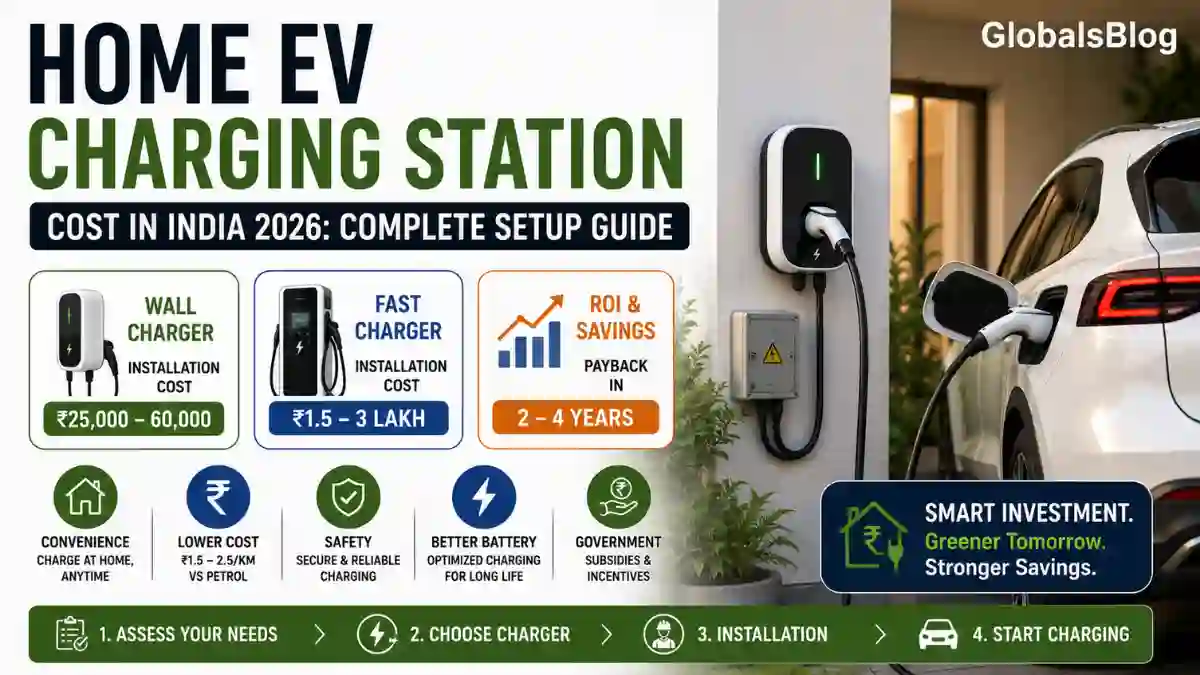
Wall charger: ₹25K–60K. DC fast charger: ₹1.5–3 L. But electrical upgrades can triple that cost. Here's the real breakdown, true payback period, and installation process.
How Much Does Home EV Charging Cost?
- Wall charger (7.2 kW AC): ₹25–50 K hardware + ₹15–35 K installation = ₹40–85 K total. If your electrical panel needs upgrades (common in older Indian homes): add ₹40–80 K.
- DC fast charger (22–50 kW): ₹1.2–3 L hardware + ₹50–150 K installation = ₹1.5–3.5 L total. This requires dedicated 3-phase power, transformer upgrade, and civil work. Most homes can't support this without ₹3–10 L in grid upgrades.
- FAME subsidy covers 20% of charger cost, not electrical work. So a ₹40 K charger gets ₹8 K subsidy (you pay ₹32 K). But ₹80 K in electrical upgrades has zero subsidy.
- Payback period: 4–7 years for wall chargers. You save ₹200–400/month on electricity (vs ₹800–1,500/month at public chargers). At that rate, ₹40–50 K initial cost recovers in 4–6 years.
- DC fast charger payback: 7–12 years (if ever). Residential DC chargers are rare because the ROI is terrible for home use. They're best for commercial/charging hubs (covered in our business guide).
2026 Reality Check: 78% of Indian home EV chargers are wall chargers (7.2 kW), not DC fast chargers. Average installation time: 3–5 days (including permits and inspection). True installed cost average: ₹65–95 K (not ₹40 K + charger). Monthly electricity cost: ₹300–500 (vs ₹800–1,500 at public chargers). The numbers work, but only if you account for true installation costs upfront.
Complete Cost Breakdown: What You'll Actually Pay
Important: These costs vary significantly by region. Bangalore & Pune: lower electrical costs (better grid). Mumbai: higher land costs. Tier-2 cities: fewer licensed electricians (higher labor). Always get 3 quotations before committing.
The Real ROI: When Does It Make Financial Sense?
Honest assessment: If you do 80%+ of charging at home and have stable electricity rates, payback is 5–6 years. If you're a heavy public-charger user already, home charging makes sense immediately (the convenience alone is worth ₹1–2 K/month for most users).
Step-by-Step Installation Process & Timeline
Home Charging vs Public Chargers: The True Comparison
| Aspect | Home Charger (Wall) | Public DC Fast Charger | Winner |
|---|---|---|---|
| Upfront Cost | ₹65–90 K | ₹0 (pay per use) | Public |
| Monthly Cost (80% home charging) | ₹350–500 | ₹2,000–2,500 | Home |
| Convenience | Wake up with full battery | Need to travel, wait 30–45 min | Home |
| Installation Time | 3–6 weeks (includes permits) | Instant | Public |
| Charging Speed | 6–8 hours (overnight okay) | 30–45 minutes to 80% | Public (for long drives) |
| Best For | Daily commuting, city use | Long-distance road trips | Hybrid approach (both) |
Reality: Ideal setup is home charging for daily commutes + public DC for road trips. Home chargers fail only if you're constantly doing 400+ km journeys (then public chargers make sense).
How This Connects to Your EV Infrastructure Journey
FAME Subsidy: How To Actually Claim It
The Process (Simplified)
- Register on FAME portal before purchasing charger. Go to
fameinindia.gov.in, create account with your Aadhaar. - Select approved charger model. Only specific brands/models qualify. Tata, Siemens, Croma products are FAME-approved. DIY setups don't qualify.
- After installation, submit: invoice, installation photo, Aadhaar, meter reading. Process takes 4–8 weeks.
- Subsidy (20% of charger cost, max ₹10K) deposits directly to your bank. The ₹10 K cap means beyond a certain charger price, marginal benefit drops.
Common issue: 30% of applicants get rejected for incomplete documentation. Keep receipts, installation photos, and meter readings organized from day 1.
Honest Warnings: When Home Charging Doesn't Work
- Rented apartment without owner approval: You can't install permanent wiring. Skip home charging and rely on public networks.
- Old building with shared electrical panel: Your upgrade impacts neighbors (overload). Building society approval is required; expect 2–3 months of delays.
- Frequent multi-city travel (400+ km trips): Home charging is slow (6–8 hours). You'll rely on public DC chargers anyway. Home charger cost may not be justified.
- Unreliable grid power (frequent cuts): Chargers need stable voltage. Frequent power cuts in your area = charger damage risk. Not recommended below 8-hour average availability.
- Very high electricity rates (>₹10/kWh): In some cities, home charging cost approaches public charging cost. Calculate real savings before committing.
"The biggest mistake EV buyers make: they assume home charging cost is ₹30K (charger price). When the electrician says ₹80K, they're shocked. Then they skip upgrades, install unsafe systems, and face disconnection. Spend the 4 weeks on proper assessment upfront. It's worth it." — Certified EV charging installation expert, India, 2026
The Home Charging Verdict: Does It Make Sense for You?
Home charging makes sense if: you own your home, do 80%+ of charging there, and have stable electricity supply. The upfront cost (₹65–90 K with upgrades) recovers in 5–7 years through electricity savings + convenience value. It's not a financial slam dunk, but it's a solid long-term investment.
Home charging doesn't make sense if: you rent, travel 400+ km frequently, or have grid instability. In these cases, focus on using public DC chargers strategically and use our charging apps guide to optimize your road trips.
The future of EV ownership in India is hybrid: home charging for daily commutes + public networks for longer journeys. Plan your setup accordingly.
Leave a comment
Share a quick thought about this story.
Thanks for sharing your view. It is ready for review.
Please try again in a moment.