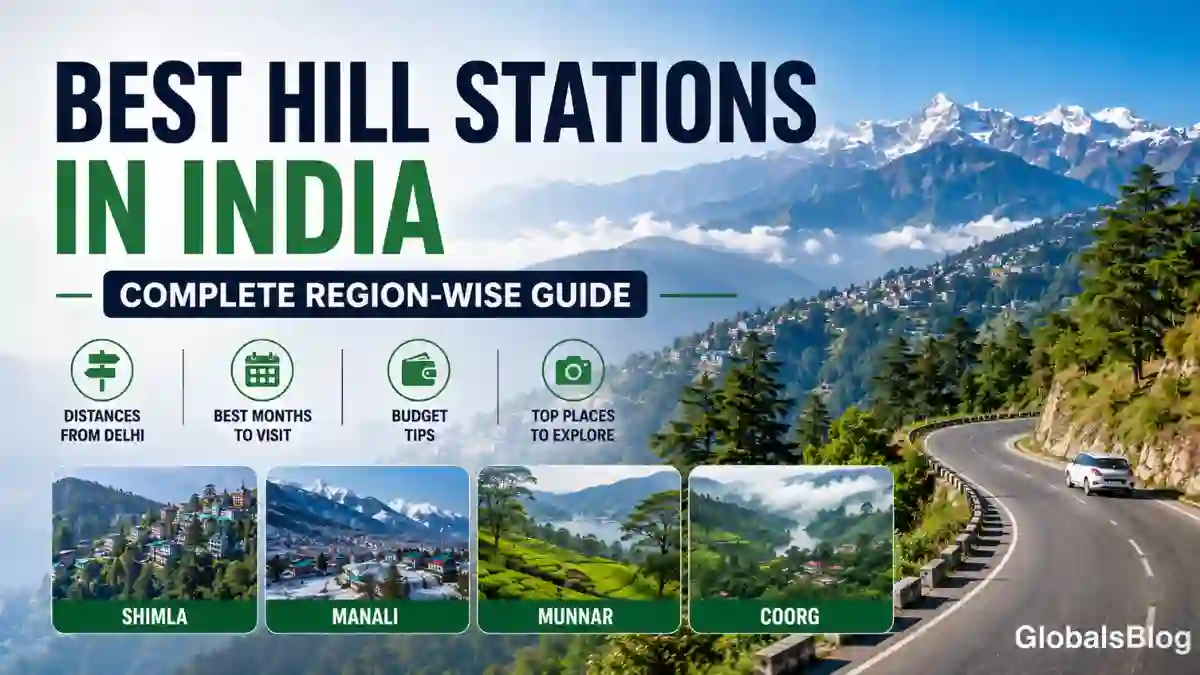
From Shimla's colonial charm to Munnar's tea gardens — India''s hills cover more ground than any single list usually admits.
A reader from Gurugram once asked us a very specific question — "Which hill station is close enough for a weekend but far enough to actually feel different from Delhi?" We sent him three options under 300 km. He picked Kasauli over the more famous Shimla and came back saying it was the best decision of his year. Sometimes the obvious choice is not the right one.
The best hill stations in India include Shimla, Manali, and Mussoorie in the North; Munnar, Coorg, and Ooty in the South; Darjeeling and Gangtok in the East; and Mahabaleshwar and Lonavala in the West. For Delhi-based travellers, Kasauli, Nainital, and Mussoorie offer the best weekend-distance options. Each region offers genuinely different terrain, climate, and culture — picking the right one depends on travel distance and season more than any single "best" ranking.
Why "Best Hill Station in India" Is the Wrong Question to Ask
Search for this topic and you will find dozens of lists ranking Shimla against Munnar against Darjeeling as if they are competing for the same trip. They are not. Comparing a North Indian Himalayan hill station to a South Indian Western Ghats hill station is like comparing a ski resort to a rainforest — both are mountains, but the experience, climate, and travel logistics are completely different.
The right question is which region's hill stations fit your travel distance, season, and style — not which single hill station wins an abstract ranking. A Delhi-based traveller and a Bangalore-based traveller are not actually choosing between the same options at all, even though both might search "best hill stations in India."
The Four Hill Regions of India
North India's hill stations — Shimla, Manali, Mussoorie, Nainital, Kasauli — sit in the Himalayan foothills and offer genuine snow in winter at higher elevations, colonial-era architecture, and apple orchards. South India's hill stations — Munnar, Coorg, Ooty, Wayanad — sit in the Western Ghats and offer tea and coffee estates, monsoon-fed waterfalls, and a tropical-meets-cool climate that never sees snow. East India's hill stations — Darjeeling, Gangtok, Kalimpong — offer Himalayan views with a distinct Nepali and Tibetan cultural influence and genuinely excellent tea. West India's hill stations — Mahabaleshwar, Lonavala, Matheran — sit in the Sahyadri range and work as accessible weekend escapes from Mumbai and Pune.
Match the Season to the Region, Not the Other Way Around
This is where most trip planning goes wrong. North Indian hill stations are at their best from March to June and again September to November, with winter bringing genuine cold and occasional snow. South Indian hill stations peak during and just after monsoon — June through September — when waterfalls run full and tea gardens turn vivid green. Trying to visit Munnar expecting a North Indian winter experience, or Shimla expecting South Indian monsoon lushness, sets up disappointment that has nothing to do with the destination itself.
Best Hill Stations in India — Region by Region
Shimla remains India's most recognisable hill station for good reason — the Mall Road promenade, colonial-era architecture, and Christ Church create a genuinely distinct atmosphere unlike anywhere else in North India. What surprises first-time visitors is how walkable the town centre is, with most major attractions within a comfortable stroll of each other. The toy train journey from Kalka, while slow at 5–6 hours, is an experience in itself rather than just transport. Summer (April-June) brings pleasant 15-25°C weather while winter occasionally delivers snow, making it one of the few hill stations genuinely worth visiting in both seasons. Our complete India travel guide covers Shimla alongside other major Himalayan destinations.
Manali has evolved from a quiet apple-growing town into India's adventure travel hub — paragliding, river rafting on the Beas, and the gateway to high-altitude passes like Rohtang and Atal Tunnel toward Lahaul-Spiti. Old Manali, with its cafe culture and laid-back backpacker atmosphere, sits in genuine contrast to the more commercial main town just across the river. The honest trade-off here is crowding — Manali''s popularity means peak season (May-June, December-January) brings traffic jams that test patience. Visit in late September or early October for a noticeably better experience with similar pleasant weather and a fraction of the crowds.
Munnar's rolling tea estates represent South India's hill station identity at its most photogenic — manicured green slopes that genuinely stretch to the horizon in every direction. Eravikulam National Park, home to the endangered Nilgiri Tahr, and a proper tea factory tour add substance beyond the views. Unlike North Indian hill stations, Munnar never sees snow but offers a consistently cool 15-22°C climate even during Indian summer, making it a genuine escape from coastal Kerala heat. The town gets noticeably crowded on weekends — visiting mid-week transforms the experience entirely. Our full South India travel guide covers Munnar alongside Coorg and the Kerala backwaters.
Coorg distinguishes itself from Munnar through coffee rather than tea, and a noticeably more laid-back, less touristy atmosphere even at peak season. The homestay culture here is genuinely excellent — staying within a working coffee or spice plantation offers an immersive experience that hotel-based hill stations rarely match. Abbey Falls and the Namdroling Monastery are the established sights, but walking through a plantation at dawn with the morning mist still settling is the experience most returning visitors mention first. Coorg works particularly well for couples and small groups seeking a quieter alternative to the more commercialised South Indian hill stations.
Darjeeling occupies a genuinely unique position among Indian hill stations — Himalayan views of Kanchenjunga, world-renowned tea estates, and a distinct Nepali-Tibetan cultural character that feels different from anywhere else in India. The Darjeeling Himalayan Railway, a UNESCO World Heritage toy train, remains a genuine highlight rather than a tourist gimmick. Tiger Hill''s sunrise view of Kanchenjunga on a clear day is among the most rewarding sights in Indian hill travel, though clear mornings are not guaranteed and require some luck with weather. The tea estate tours here go deeper into the actual tasting and grading process than most South Indian equivalents.
Mahabaleshwar's genuine advantage is proximity — a manageable 3-4 hour drive from both Mumbai and Pune makes it the default weekend hill escape for Maharashtra''s biggest cities. Strawberry farms, numerous viewpoints over the Western Ghats, and the source of the Krishna River at Mahabaleshwar temple give the town more substance than a typical quick-getaway destination. Monsoon season here is spectacular but comes with genuinely heavy rain and occasional landslide risk on access roads — check conditions before a monsoon trip specifically.
Hill Stations Near Delhi — The Most Searched Question on This Topic
This deserves its own dedicated section given how many Delhi-based travellers search specifically for this. The honest breakdown by distance: within 100 km, Kasauli and Lansdowne are your best options for a genuine weekend trip without excessive driving. Between 200-300 km, Shimla, Nainital, and Mussoorie offer more developed infrastructure and a fuller hill station experience. Beyond 300 km, Manali and the Kullu Valley justify the longer drive with genuinely different scenery and adventure options.
Our honest take — Kasauli is the most underrated option in this entire list. It sees a fraction of Shimla's tourist crowds, sits at a very manageable 280 km from Delhi, and offers genuinely pleasant colonial-era charm without the Mall Road commercialisation that has changed Shimla's character over the past decade. If your goal is an actual relaxing escape rather than a tourist checklist, Kasauli deserves serious consideration over the more famous options.
Lesser-Known Options Worth Considering
Chail, just 45 km from Shimla, offers a quieter alternative with the world's highest cricket ground and genuine pine forest walks away from any crowd. Lansdowne in Uttarakhand remains one of the few hill stations that has resisted heavy commercial development, maintaining a genuinely peaceful cantonment-town character. Both are worth the slight extra planning effort for travellers wanting to avoid the more touristed circuit.
Hill Station Trip Planning Framework
-
Pick your region based on travel distance, not fame A famous hill station 600 km away is not automatically better than a lesser-known one 150 km away. Calculate realistic travel time using our Road Trip Planner before deciding, factoring in mountain road conditions which are typically slower than highway driving.
-
Match your season to your chosen region's peak window North Indian hill stations and South Indian hill stations have almost opposite peak seasons. Confirm your travel dates align with the right region rather than picking dates first and forcing a destination to fit.
-
Book accommodation 3-4 weeks ahead for peak season weekends Popular hill stations near major cities — Mahabaleshwar from Mumbai, Mussoorie from Delhi — see heavy weekend demand. Good properties sell out, especially during May-June and the October-December festive window.
-
Check road conditions specifically during monsoon Hill roads, particularly in the Western Ghats and parts of Himachal, can experience landslides and closures during heavy monsoon. Check recent road status reports rather than assuming conditions from a general seasonal guideline.
Tips for Hill Station Travel in India
- Pack layers regardless of season — hill station evenings drop significantly even when daytime temperatures feel mild
- Book a room with a valley or mountain view specifically — the price difference is usually small but the experience difference is significant
- Visit less famous nearby towns for day trips rather than only staying in the main hill station — often less crowded with equally good views
- Use the Trip Cost Calculator to budget your hill station trip including the often-underestimated cost of local sightseeing taxis
- Carry cash for smaller hill towns — card and UPI acceptance can be inconsistent away from main tourist areas
Hill Station Travel Mistakes to Avoid
- Visiting the most famous option without checking the season fit — A reader once booked Manali for August expecting pleasant weather, not realising peak monsoon brings heavy rain and occasional road closures on the route. A simple seasonal check would have pointed him toward October instead.
- Underestimating mountain driving time using flat-road distance assumptions — a 250 km mountain route can easily take twice as long as a similar highway distance
- Not booking weekend accommodation in advance for popular nearby hill stations — Mahabaleshwar and Mussoorie weekends sell out quickly during peak months
- Packing only for the daytime temperature and being caught unprepared for cold evenings
⚠️ Disclaimer: This article is for travel inspiration and planning purposes only. Road conditions, weather patterns, and accommodation availability change frequently — always verify current information with local tourism boards and check road status before travelling, especially during monsoon season.
Pick a Region, Then Pick a Season
Shimla, Munnar, Darjeeling, and Mahabaleshwar are not competing for the same trip — they belong to different journeys entirely. Figure out your travel distance and ideal season first, and the right hill station becomes obvious rather than a 50-item list to sort through.
Kasauli is the best underrated hill station near Delhi at 280 km, offering a quieter, less commercialised experience than Shimla. For a more developed option, Mussoorie at 290 km and Nainital at 320 km are popular choices with fuller tourist infrastructure. For a true weekend trip under 100 km, Lansdowne offers a genuinely peaceful, low-crowd alternative.
Munnar in Kerala is the most popular and accessible hill station in South India, known for its tea estates and consistently cool climate. Coorg in Karnataka is an excellent alternative for travellers wanting a quieter, more laid-back experience centred around coffee plantations rather than tea. Both offer pleasant weather year-round with September to March being the ideal visiting window.
No, South Indian hill stations like Munnar, Coorg, and Ooty never receive snow due to their lower elevation and tropical latitude. They maintain a consistently cool 15-22°C climate year-round without snowfall, unlike North Indian hill stations such as Manali and Shimla which can see snow at higher elevations during winter months.
It depends on the region. North Indian hill stations like Shimla and Manali are best visited March to June and September to November. South Indian hill stations like Munnar and Coorg peak during and after monsoon, from June to March, when waterfalls and tea gardens are at their best. Always match your travel dates to the specific region rather than applying a single seasonal rule across all of India.
Mahabaleshwar at 247 km and Lonavala at 83 km are the most popular weekend hill station options from Mumbai. Lonavala suits a quick day trip or single-night escape, while Mahabaleshwar offers more substance for a full weekend with strawberry farms, viewpoints, and the source of the Krishna River as additional attractions beyond the cooler climate.
Reader Experiences