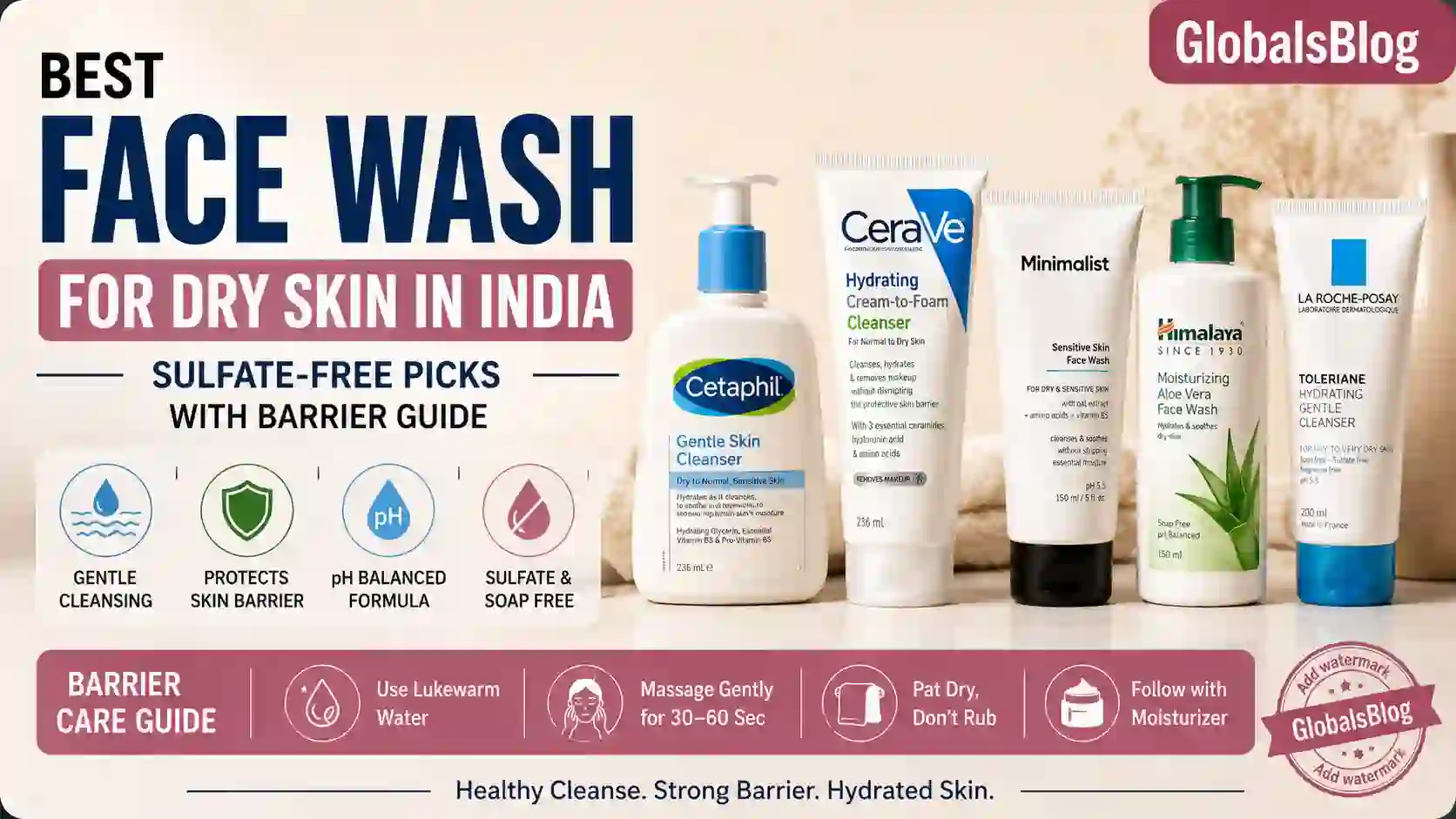
Dry skin after washing is not inevitable — it is the result of using the wrong face wash. Sulfates, high-pH cleansers, and foaming formulas designed for oily skin strip the skin barrier on dry skin types, leaving the tight, uncomfortable feeling most dry-skin buyers accept as normal. The right face wash cleans without disrupting the moisture barrier at all.
A reader from Shimla had been using a popular green tea face wash — a gel formula that produced satisfying foam, felt refreshing, and left her skin feeling "squeaky clean." By January, her cheeks were visibly flaky, her T-zone was the only area that didn't feel stretched after washing, and she had added a thick moisturiser to her routine specifically to compensate for how dry her face felt post-wash. A dermatologist observed that the squeaky-clean feeling she valued was precisely the problem: it indicated that the face wash had removed not just dirt and excess sebum but the skin's natural lipid layer — the ceramides and fatty acids that form the moisture barrier. For dry skin, the goal of a face wash is to remove dirt while leaving the barrier intact. This guide identifies the face washes that do this correctly in Indian conditions.
Best face washes for dry skin in India: Cetaphil Gentle Skin Cleanser (best overall — no foam, no sulfates, cream formula, dermatologist recommended, ₹349–₹549); CeraVe Hydrating Facial Cleanser (best ceramide formula — ceramides + hyaluronic acid, no foam, ₹799–₹1,299); Minimalist Gentle Hydrating Face Wash (best Indian brand — glycerin + amino acids, sulfate-free, ₹299–₹399); Biotique Bio Aloe Vera Face Wash (best natural — Ayurvedic, aloe vera base, mild, ₹85–₹149); La Roche-Posay Toleriane Hydrating Gentle Cleanser (best premium — micellar-like texture, ceramides, ₹1,200–₹1,800); Himalaya Gentle Hydrating Face Wash (best budget — aloe vera + honey, ₹99–₹175). Key rule: for dry skin, avoid any face wash that produces significant foam — foam means sulfates, sulfates strip the barrier. Choose cream, gel, or lotion cleansers that rinse clear.
Best Face Washes for Dry Skin in India — Ranked
Cetaphil Gentle Skin Cleanser is the most consistently recommended face wash for dry skin globally and in India — a lotion-textured cleanser with no foaming agents, no fragrance, and no harsh detergents that cleans the skin surface by emulsification without disrupting the skin's natural lipid layer. The formula uses mild non-ionic surfactants (Cetearyl Alcohol, Stearyl Alcohol, Propylene Glycol) that lift dirt and makeup without the aggressive stripping action of sodium lauryl sulfate (SLS) or sodium laureth sulfate (SLES) found in foaming cleansers. The product produces no foam — it is applied to the face, massaged gently to emulsify dirt and excess oil, and either rinsed off with water or wiped away with a damp cloth (the no-rinse wipe-off method produces even less barrier disruption and is recommended for very dry and sensitive skin). After use, skin feels comfortable and hydrated — not squeaky clean, not tight, simply clean. Dermatologist-tested, hypoallergenic, and safe for eczema-prone and chronically dry skin. At ₹349–₹549 for 125–500ml, the 500ml pump bottle represents the best value and is the recommended format for daily use. Available at Apollo Pharmacy, Nykaa, and Amazon.
CeraVe Hydrating Facial Cleanser is the most sophisticated cleanser for dry and compromised skin available in India — a non-foaming lotion cleanser developed with dermatologists that contains ceramides (NP, EOP, AP — the three ceramides most important for skin barrier function), hyaluronic acid, and CeraVe's patented MVE (MultiVesicular Emulsion) technology that releases hydrating ingredients gradually over time rather than in a single application. The ceramide content in a face wash is particularly valuable for dry skin — most cleansers strip ceramides during the wash; CeraVe replaces them while cleaning. The hyaluronic acid retains water in the skin during the wash process. The result is a cleanser that leaves dry skin feeling genuinely hydrated post-wash rather than merely not-stripped. The MVE technology's time-release mechanism means the hydrating benefit continues for hours after washing. At ₹799–₹1,299 for 236–473ml, it is priced at the premium end of the Indian market and is CeraVe's most popular face wash for dry skin globally. Available at Nykaa, Amazon, and select Apollo Pharmacy outlets.
Minimalist's Gentle Hydrating Face Wash is the best Indian D2C brand cleanser for dry skin — a transparent gel formula using amino acid-derived surfactants (Sodium Lauroyl Glutamate, Sodium Cocoyl Glutamate) that are among the mildest cleaning agents available, combined with glycerin (humectant that draws moisture into skin during washing) and panthenol (provitamin B5, which helps maintain skin barrier integrity). The amino acid surfactants in Minimalist's formulation are a meaningful upgrade over the mild surfactants in many drugstore cleansers — they are derived from natural amino acids and have pH profiles that are inherently closer to skin's own acid mantle (pH 4.5–5.5). Sulfate-free. Fragrance-free. Produces minimal foam — appropriate for dry skin. At ₹299–₹399 for 100ml, it is competitively priced for the ingredient quality. The transparent gel texture is more refreshing than cream cleansers in India's humid summer months while still being gentle enough for dry skin. Best option for dry skin buyers who want an Indian brand at a competitive price with clinical-grade ingredient transparency.
Himalaya's Gentle Hydrating Face Wash is the most accessible quality face wash for dry skin in India — a herbal formula using aloe vera (humectant and skin soother), honey (natural humectant and mild antimicrobial), and rose water (hydrating and mild astringent) in a base that produces minimal foam and is suitable for daily dry skin use. At ₹99–₹175 for 100–200ml, it is the most affordable option on this list and is available at every pharmacy, supermarket, and general store nationwide including tier-2 and tier-3 cities. The formula is not as sophisticated as Cetaphil or CeraVe — it doesn't contain ceramides or amino acid surfactants — but it is significantly gentler than standard foaming face washes and does not produce the tight, stripped feeling on dry skin. The aloe vera base provides some humectant benefit during washing. For buyers in cities where premium cleansers are not readily available, or for first-time dry skin cleanser buyers transitioning away from foaming washes, the Himalaya Gentle Hydrating is the most accessible entry point. Widely available at pharmacies, supermarkets, and general stores nationally.
Biotique Bio Aloe Vera Cream Face Wash is the best Ayurvedic-positioned cream cleanser for dry skin in India — a cream-texture formula using aloe vera as the primary base with Pichwai (Spirulina, microalgae rich in amino acids and proteins) and Manjistha (Rubia cordifolia, traditionally used for skin brightening and anti-inflammatory effect in Ayurveda) as active herbal ingredients. The cream texture produces no foam and removes dirt through gentle emulsification — appropriate for dry and sensitive Indian skin. At ₹85–₹149 for 100–150ml, it is the most affordable cream cleanser on this list and one of the few Ayurvedic-positioned cleansers that prioritises hydrating over foaming. Biotique avoids harsh preservatives in this formulation. The cream texture also makes it particularly comfortable in north Indian winter conditions (Delhi, UP, Punjab) when skin is at its driest. For buyers who prefer natural or Ayurvedic formulations and want a cream cleanser rather than a gel or lotion, the Biotique Bio Aloe Vera is the most practical recommendation in this category.
La Roche-Posay Toleriane Hydrating Gentle Cleanser is the dermatologist-standard premium cleanser for severely dry, rosacea-prone, and reactive skin — a nearly water-textured formula with La Roche-Posay's Thermal Spring Water (mineral-rich, selenium-containing, with documented anti-irritant and anti-radical properties), niacinamide (strengthens the skin barrier and reduces redness), and ceramides. The formula is designed for the most sensitive end of the dry skin spectrum — skin that reacts to most cleansers including Cetaphil. No fragrance, no paraben, no alcohol, no soap. At ₹1,200–₹1,800 for 200ml, it is the most expensive cleanser on this list — justified for buyers with chronic eczema, rosacea, or post-procedure skin where barrier integrity is paramount. The La Roche-Posay brand is the reference formulation in French dermatology and is recommended by dermatologists in India for the most reactive skin types. For buyers whose dry skin is accompanied by redness, stinging from other cleansers, or visible sensitivity reactions, this is the correct first step in a rebuild routine.
Best Face Wash for Dry Skin — Comparison Table
| Product | Price | Texture | Key Active | Foam Level | Best For |
|---|---|---|---|---|---|
| Cetaphil Gentle | ₹349–₹549 | Lotion | Mild surfactants | None | Best overall, eczema, daily use |
| CeraVe Hydrating | ₹799–₹1,299 | Lotion | Ceramides + HA | None | Barrier repair, severe dryness |
| Minimalist Gentle | ₹299–₹399 | Gel | Amino acids + Glycerin | Minimal | Indian brand, transparent formula |
| Himalaya Gentle | ₹99–₹175 | Gel-cream | Aloe vera + honey | Low-moderate | Budget, wide availability |
| Biotique Aloe Vera | ₹85–₹149 | Cream | Aloe + Spirulina | None | Ayurvedic, budget cream |
| La Roche-Posay Toleriane | ₹1,200–₹1,800 | Thin lotion | Niacinamide + Ceramides | None | Rosacea, eczema, reactive skin |
Why Most Face Washes Are Wrong for Dry Skin
Sulfates are the primary enemy of dry skin: Sodium Lauryl Sulfate (SLS) and Sodium Laureth Sulfate (SLES) are the surfactants responsible for the foaming and "squeaky clean" feeling in most face washes. They are highly effective at removing dirt, oil, and makeup — but they are not selective. They also remove the skin's natural ceramides, cholesterol, and fatty acids that constitute the moisture barrier. For oily skin, this stripping is desirable — excess sebum is the problem. For dry skin, the natural lipid layer is already deficient; removing more of it with SLS produces the tight, flaky, uncomfortable feeling the Shimla reader experienced. The single most important specification when choosing a face wash for dry skin is sulfate-free.
High-pH cleansers disrupt the acid mantle: Healthy skin has a pH of approximately 4.5–5.5 — mildly acidic. This "acid mantle" is critical for barrier function, antimicrobial protection, and enzyme activity. Many soap-based and older face wash formulations have pH values of 8–10 — significantly alkaline. Using a high-pH cleanser daily raises the skin surface pH above the healthy range, disrupting barrier function and creating an environment where bacteria and dryness-worsening enzymes are more active. The cleansers in this list are all formulated to pH 4.5–6 — within the skin's optimal range.
The foaming cleanser trap: Foam does not clean better than non-foaming formulas. Foam is cosmetic — it makes the cleaning process feel more effective but the cleaning action is done by the surfactant molecules, not the foam they produce. Non-foaming cleansers with mild surfactants (amino acid-derived, glucoside-based) clean equally well while leaving the barrier intact. The preference for foaming face washes is a marketing-conditioned expectation that is directly harmful for dry skin types.
Water temperature matters: Hot water (above 40°C) significantly increases skin barrier disruption during cleansing — it opens the pores and increases the permeability of the skin surface to the surfactants in the cleanser, amplifying stripping. Lukewarm water (35–37°C) is the recommended temperature for dry skin face washing. The Shimla reader's hot water habit during winter months was compounding the sulfate face wash's barrier damage. Cold water (15–20°C) has the opposite effect — it constricts pores and reduces surfactant penetration, which is why a cold-water final rinse after cleansing is beneficial for dry skin.
Dry Skin Face Washing Protocol
| Step | Dry Skin Correct Method | Common Mistake |
|---|---|---|
| Water temperature | Lukewarm (35–37°C) — final rinse cold | Hot water throughout — worsens stripping |
| Cleanser selection | Non-foaming, sulfate-free, pH 4.5–6 | Foaming gel cleanser designed for oily skin |
| Application method | Gentle circular motions, 20–30 seconds, no pressure | Vigorous scrubbing for "deep clean" |
| Rinsing | Thorough rinse, no cleanser residue left on skin | Quick rinse leaving surfactant film |
| Drying | Pat dry gently with soft towel — leave slightly damp | Rubbing dry — disrupts barrier, removes moisture |
| Post-wash timing | Moisturiser within 60 seconds — seals in damp-skin moisture | Moisturiser applied 5–10 minutes later on dry skin |
| Frequency | Once daily (evening) or twice if necessary — dry skin cleans less than oily skin | Washing 3+ times daily — each wash further depletes barrier |
The most impactful single change for dry skin face washing: apply moisturiser on slightly damp skin within 60 seconds of washing. The damp-skin moisture is sealed in by the moisturiser — waiting until skin dries completely means the moisturiser is sealing a dry surface. See our moisturiser guide (includes dry skin options) for the post-wash step product recommendations.
✓ Face Wash Tips for Dry Skin in India
- Switch to once-daily cleansing in winter: Dry skin in north Indian winter (Delhi, UP, Punjab, Rajasthan — December and January) is at its most fragile. The skin barrier's ceramide and lipid content is already depleted by cold air and low humidity. Washing twice daily in these conditions strips more than the barrier can replenish. Morning cleansing for dry skin in winter can be replaced by a simple warm water rinse (no cleanser) — the skin does not accumulate enough oil overnight to require detergent cleaning in the morning. Evening cleansing remains necessary to remove pollution, sunscreen, and makeup
- Check for SLS and SLES in your current cleanser before switching: If your current face wash lists Sodium Lauryl Sulfate or Sodium Laureth Sulfate in the first 5 ingredients, it is the primary cause of your post-wash tightness. Both will appear exactly as these names on the ingredients list. Switching to any of the cleansers in this guide — even the most affordable (Himalaya, Biotique) — will produce an immediate, noticeable improvement in post-wash comfort without any other routine changes
- Cetaphil can be used without water — the wipe-off method: For very dry and sensitive skin, Cetaphil Gentle Skin Cleanser can be applied to the face, massaged to emulsify dirt, and wiped off with a damp cotton pad rather than rinsed with water. This "rinse-free" method produces even less barrier disruption than water rinsing and is particularly beneficial in winter when the tap water itself (in many Indian cities, hard water with high mineral content) can be a mild irritant on compromised dry skin. The wipe-off method is used in dermatology ward settings for patients with compromised barrier conditions
- Avoid exfoliating face washes entirely for dry skin: Scrub particles (walnut shell, apricot seed, sugar — found in many "brightening" and "deep cleaning" face washes) are physically abrasive to the already-thin dry skin barrier. AHA/BHA-containing cleansers (used for exfoliation) have limited benefit as face washes because the contact time is too short for acids to function effectively — and they add irritation risk on dry skin. For dry skin, exfoliation as a separate step (a gentle AHA toner 1–2 times weekly) is safer than a combined cleanser-exfoliator
- See our moisturiser guide for the step immediately after washing, and our sunscreen guide for the morning protection step — the complete dry skin routine is cleanser → moisturiser (on damp skin) → SPF (morning) or cleanser → serum → moisturiser (evening)
✗ Face Wash Mistakes Dry Skin Buyers Make
- Choosing a face wash based on "deep clean" or "pore-cleansing" marketing: "Deep clean" on a face wash label is a marketing term for aggressive surfactant action — precisely the wrong thing for dry skin. Pores on dry skin are not clogged with excess sebum; they do not need deep cleaning. The Shimla reader's foaming green tea face wash with "deep pore cleansing" claims was designed for oily skin where excess sebum-clogged pores are the concern. For dry skin, the goal is surface-level cleaning of dirt and pollution without accessing the barrier lipids below the surface
- Switching face washes frequently based on social media recommendations: Dry skin face wash results are visible within the first wash — the right cleanser leaves skin comfortable immediately. If a face wash leaves your skin tight, uncomfortable, or visibly drier after the first use, it is the wrong product and should be replaced immediately. Unlike serums and treatments that require 8–12 weeks for results, the face wash's effect on dry skin is apparent from the first application. The switching frequency issue that applies to treatments does not apply to cleansers for dry skin — trust the post-wash feel immediately
- Using the same face wash year-round in north Indian cities: Skin barrier function varies significantly with season. In Delhi, Lucknow, and Jaipur between April and September (hot, often humid), a lightweight gel cleanser (Minimalist Gentle) is appropriate even for dry skin. In December and January (cold, humidity 20–40%), the same face wash may over-strip. Having a seasonal cleanser strategy — a more hydrating cream cleanser (Cetaphil, CeraVe) for winter and a lighter gel (Minimalist) for summer — produces better year-round skin health than using the same product throughout
- Washing the face more than necessary: Dry skin does not produce excess oil and does not accumulate the amount of impurities that oily skin does. Washing twice daily is typically sufficient; three or more times daily is counterproductive. Morning cleansing for dry skin can often be replaced by a simple warm water rinse. Each wash depletes some barrier lipids — the fewer washes, the less total barrier disruption over time
⚠️ Disclaimer: Face wash prices and formulations change periodically. All prices listed are indicative as of August 2026. If dry skin is accompanied by redness, persistent scaling, itching, or symptoms that do not improve with a gentle cleanser within 4 weeks, consult a dermatologist — these may indicate eczema, psoriasis, or rosacea requiring specific treatment rather than over-the-counter products.
Cetaphil for Daily Gentle Use. CeraVe for Ceramide Repair. Minimalist for Indian Brand. Himalaya for Budget. Biotique for Ayurvedic. La Roche-Posay for Reactive Skin. No Foam. No Sulfates. Lukewarm Water. Moisturise Within 60 Seconds.
The Shimla reader's squeaky-clean satisfaction with a sulfate face wash was costing her a layer of the moisture barrier with every wash — a debt that her body lotion was partially repaying each day. The resolution was straightforward: switch to Cetaphil Gentle Skin Cleanser (no foam, no sulfates, no tight feeling), switch from hot to lukewarm water, apply moisturiser within 60 seconds of patting dry, and drop the morning wash in January to a warm water rinse only. Her flakiness resolved in two weeks. Her post-wash tightness resolved in three days. The Cetaphil did not moisturise her skin — it simply stopped stripping it. That is all a good face wash for dry skin needs to do. The cleanser on this list that does it best for your budget is the correct choice. The squeaky-clean feeling is the one to avoid, not seek.
Best face washes for dry skin in India: Cetaphil Gentle Skin Cleanser (₹349–₹549, best overall — no foam, no sulfates, cream-lotion texture, dermatologist recommended for dry and eczema-prone skin); CeraVe Hydrating Facial Cleanser (₹799–₹1,299, best ceramide formula — ceramides + hyaluronic acid, barrier repair while cleansing); Minimalist Gentle Hydrating Face Wash (₹299–₹399, best Indian brand — amino acid surfactants, glycerin, sulfate-free); Himalaya Gentle Hydrating Face Wash (₹99–₹175, best budget — aloe vera + honey, widely available); Biotique Bio Aloe Vera Cream Face Wash (₹85–₹149, best Ayurvedic — cream texture, no foam); La Roche-Posay Toleriane (₹1,200–₹1,800, best premium — niacinamide + ceramides, for reactive/rosacea dry skin). Key rule: choose any face wash that produces no or minimal foam — foam indicates sulfates which strip the dry skin barrier.
Yes — Cetaphil Gentle Skin Cleanser is the most consistently dermatologist-recommended face wash for dry skin in India. The no-foam, non-ionic surfactant formula cleans without disrupting the skin's natural lipid barrier. After use, skin feels comfortable and hydrated — not tight, not squeaky clean. It is hypoallergenic, fragrance-free, and safe for eczema-prone and chronically dry skin. Can be used as a rinse-off cleanser or wiped off with a damp cotton pad without rinsing (the no-rinse method is even gentler for very dry skin). Price: ₹349 (125ml) / ₹549 (500ml pump). Available at Apollo Pharmacy, Nykaa, Amazon. The 500ml pump is the most economical format for daily use. Cetaphil is appropriate for all skin types as a daily cleanser, but produces the most visible improvement on dry, sensitive, and eczema-prone skin types where conventional foaming cleansers cause problems.
Tightness after washing indicates your face wash has stripped your skin's natural lipid layer — the ceramides, cholesterol, and fatty acids that form the moisture barrier. This is caused by: sulfates (SLS/SLES) in the cleanser — the most common cause; high-pH formulations (above pH 6) that disrupt the acid mantle; hot water during washing that increases barrier permeability; or washing too frequently. The solution: switch to a sulfate-free, non-foaming cleanser (Cetaphil, CeraVe, Minimalist Gentle, or any product in this guide), use lukewarm rather than hot water, and apply moisturiser within 60 seconds of patting dry. The tightness should resolve within the first week of switching products. If tightness persists with a gentle cleanser, consult a dermatologist — it may indicate eczema, rosacea, or a compromised barrier condition requiring prescription treatment.
Ingredients to avoid in face wash for dry skin: Sodium Lauryl Sulfate (SLS) — the most aggressive surfactant, found in most foaming cleansers; Sodium Laureth Sulfate (SLES) — slightly milder than SLS but still too stripping for dry skin; Ammonium Lauryl Sulfate / Ammonium Laureth Sulfate — same stripping concern; Alcohol (denatured, SD alcohol, ethanol) high in the ingredients list — drying and irritating; Synthetic fragrance (Parfum/Fragrance listed as a single ingredient) — common sensitiser for dry skin; Menthol, eucalyptus, peppermint — cooling sensation masks irritation while disrupting barrier; Scrubbing particles (walnut shell, apricot seeds, sugar) — too abrasive for dry skin; Salicylic acid or glycolic acid in a face wash — exfoliating ingredients with insufficient contact time to work effectively but sufficient irritation potential for dry skin. What to look for instead: Sodium Lauroyl Glutamate, Coco-Glucoside, Decyl Glucoside (mild surfactants); Glycerin, Panthenol, Hyaluronic Acid (humectants); Ceramides; "Sulfate-free" label.
For dry skin, once daily cleansing (evening) is typically sufficient. Morning cleansing for dry skin can often be replaced by a warm water rinse alone — dry skin does not produce enough oil overnight to require detergent cleansing in the morning, and a warm water rinse removes any residue from overnight moisturiser or serum without barrier disruption. Evening cleansing is always necessary: removes sunscreen, pollution, makeup, and the day's accumulated surface impurities. If twice-daily cleansing is preferred: use a gentle, non-foaming cleanser (Cetaphil, CeraVe) for both washes. Avoid washing more than twice daily — each additional wash depletes some barrier lipids and cumulative barrier disruption worsens dry skin over time. During north Indian winter (December–January), reducing to once-daily cleansing and replacing the morning wash with water-only rinse is particularly beneficial.
Cetaphil Gentle Skin Cleanser vs CeraVe Hydrating Facial Cleanser for dry skin: Both are excellent, sulfate-free, non-foaming cleansers recommended by dermatologists. Choose Cetaphil if: budget is a consideration (₹349–₹549 vs CeraVe's ₹799–₹1,299), you want the option to wipe off without rinsing (Cetaphil is specifically designed for this), or you have mildly dry skin that doesn't have a compromised barrier. Choose CeraVe if: your dry skin has a compromised barrier (eczema, chronic severe dryness, visible cracking), you specifically want ceramide-reinforced cleansing (CeraVe adds ceramides during the wash; Cetaphil simply doesn't strip them), or you prefer the newer formulation with hyaluronic acid. Both produce the correct result: clean skin that doesn't feel tight after washing. For most Indian dry skin buyers, Cetaphil is the recommendation because of better price and availability; CeraVe is the step-up for those with more severe dryness or compromised barriers. Neither is wrong — both produce significantly better results for dry skin than any foaming cleanser.
Leave a comment
Share a quick thought about this story.
Thanks for sharing your view. It is ready for review.
Please try again in a moment.