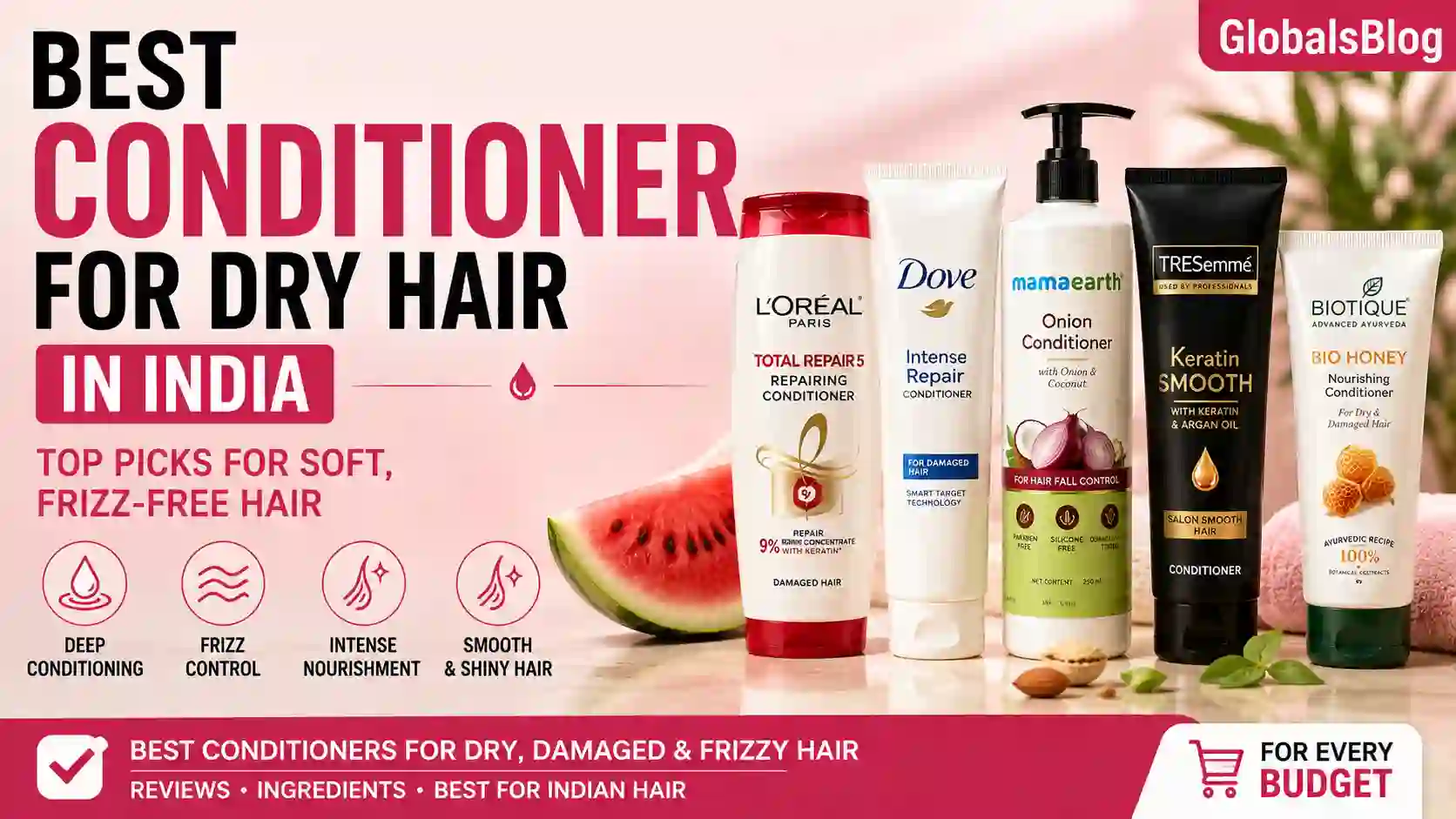
Dry hair is not a texture — it is a moisture deficit. The right conditioner does not mask dryness with silicones. It addresses the deficit where it starts: the hair shaft and scalp barrier.
A reader from Kolkata described her hair as "permanently frizzy, breaks when I comb it, and feels like straw even an hour after washing." She had tried three conditioners in the previous six months — all marketed for dry hair — and none had made a meaningful difference. When we looked at her routine, the issue was immediately clear: she was applying conditioner to her roots (where the scalp's own sebum already provides moisture), rinsing after 30 seconds (insufficient contact time for dry hair), and using hot water that was re-opening the cuticle she was trying to seal. The conditioner itself was fine. Everything around it was undoing the benefit. This guide covers both — which conditioner to choose for genuinely dry hair in India, and how to use it so it actually works.
Best conditioners for dry hair in India: L'Oreal Elvive Extraordinary Oil Conditioner (best overall — argan oil, rich without heaviness), Dove Intense Repair Conditioner (best budget — keratin actives, widely available), TRESemmé Keratin Smooth Conditioner (best for frizzy dry hair — keratin + marula oil), Mamaearth Argan Hair Conditioner (best sulphate-free ecosystem — pairs with Mamaearth shampoo), Biotique Bio Kelp Conditioner (best Ayurvedic pick), and Schwarzkopf Gliss Hair Repair (best for damaged dry hair — liquid keratin). For severe or chemically damaged dryness, a weekly hair mask (Mamaearth Onion Hair Mask, WOW Apple Cider Vinegar Hair Mask) should replace the regular conditioner once a week.
Why Is My Hair So Dry? — The Actual Causes
Dry hair in India has specific causes that differ from dry hair in colder climates. Understanding what is actually happening determines which conditioner will help most.
Hard water: Most Indian cities — Delhi, Bengaluru, Mumbai's suburbs, most of Gujarat — have hard water with high mineral content (calcium, magnesium). These minerals coat the hair shaft and block moisture absorption, making conditioner less effective. If your hair feels driest immediately after washing, hard water is likely a significant factor. A chelating shampoo used once weekly removes mineral buildup.
Excessive heat styling: Blow drying, straightening, and curling irons strip moisture from the hair shaft at high temperatures. Hair dried daily with a blow dryer without a heat protectant is physically losing moisture bonds with every session. No conditioner fully compensates for daily heat damage without also using a heat protectant.
Sulphate shampoos: Sodium lauryl sulphate (SLS) and sodium laureth sulphate (SLES) — the cleansing agents in most mainstream shampoos — remove the natural oils that keep hair moisturised. Daily shampooing with sulphate formulas strips the hair faster than any conditioner can replenish. Switching to a sulphate-free shampoo 2–3 times per week is the most effective single change for chronically dry hair.
Protein-moisture imbalance: Hair needs both moisture (water-binding ingredients like glycerin, aloe, hyaluronic acid) and protein (keratin, silk, wheat protein) to remain elastic and smooth. Too much protein without moisture makes hair stiff and brittle. Too much moisture without protein makes hair limp and weak. Genuinely dry hair in India typically needs more moisture than protein — a common mistake is using keratin-heavy products on hair that needs hydration first.
Best Conditioners for Dry Hair in India — Ranked
L'Oreal's Elvive Extraordinary Oil Conditioner is the most consistently recommended conditioner for dry hair at its price point in India — and it earns the recommendation because of how it handles the specific challenge of dry Indian hair in hot, humid conditions. The formula uses a blend of six rare flower oils (camellia, lotus, rose, tiare, sunflower, and argan) in a lightweight emulsion that delivers significant moisture to the hair shaft without the heavy, greasy coating that cheaper oil-based conditioners leave. The key is the oil blend's penetration ability — the combination includes oils with small enough molecular weight to partially enter the hair cortex rather than just coating the surface. For dry hair that also has frizz concerns (the most common Indian dry hair combination), this conditioner does both jobs in one step. Apply to mid-lengths and ends of freshly shampooed hair, leave for 2–3 minutes, rinse with cool water. At ₹349–₹399 for 192ml, it is accessible-premium — more expensive than Dove but meaningfully more effective for genuinely dry hair.
Dove Intense Repair is the most accessible quality conditioner for dry hair in India — available in every supermarket, pharmacy, and kiryana store from metros to small towns. The formula uses Dove's Keratin Repair Actives complex alongside a rich cream base that genuinely delivers moisture to dry, damaged hair at a price point (₹175–₹230 for 335ml) that makes it the strongest value proposition in this category. It is not as sophisticated as the L'Oreal Elvive formula and does not penetrate the hair shaft as effectively, but for buyers who want a reliable, widely-available conditioner that will meaningfully improve dry hair without a significant price premium, Dove Intense Repair is the consistent recommendation. It is particularly effective for hair that is dry from heat styling — the keratin actives help rebuild surface structure that heat degrades. Use 2–3 times per week as a regular conditioner, and replace with a hair mask once weekly for more severe dryness.
TRESemmé's Keratin Smooth Conditioner specifically addresses the dry-plus-frizzy combination that is the most common hair complaint in India's high-humidity cities — Kolkata, Chennai, Mumbai, Kochi — where even well-moisturised hair frizzes within hours of stepping outside. The formula pairs keratin (for strength and smoothness) with marula oil (a lightweight African oil with high oleic acid content for moisture penetration) in a conditioner that doubles as a frizz treatment. Unlike heavier anti-frizz conditioners, the TRESemmé formula does not weigh hair down — it smooths the cuticle and seals moisture in without the heavy coating that makes fine-to-medium hair flat. At ₹299–₹349 for 340ml, it is excellent value for the dual dry-hair and frizz-control benefit. For buyers in humid Indian cities who have both dryness and frizz as daily concerns, this is the most targeted recommendation.
Mamaearth's Argan Hair Conditioner is the strongest recommendation for buyers who specifically want a sulphate-free, paraben-free conditioner that fits within a clean ingredient philosophy. The formula uses argan oil, onion extract (sulphur compounds for keratin strength), and a mild base that is gentle enough for daily use on dry hair without buildup. The argan oil concentration is meaningful — not the token amount found in many products that list it as a marketing ingredient — and delivers genuine moisture to dry hair when used with the correct 2–3 minute contact time. At ₹299–₹349 for 250ml, it is mid-range priced and pairs naturally with Mamaearth's Onion Shampoo for a consistent sulphate-free routine. The D2C brand positioning means it is widely available online (Amazon, Nykaa, Mamaearth website) but less consistently stocked in offline retail compared to L'Oreal or Dove.
Schwarzkopf's Gliss Hair Repair Ultimate Repair Conditioner is the most intensive repair option in the mainstream Indian market for dry hair that is also significantly damaged — from bleaching, chemical treatments, excessive heat styling, or mechanical damage from tight braiding or rough handling. The formula uses Gliss's Liquid Keratin Complex — keratin molecules in a size range that allows partial penetration of the hair shaft rather than only coating the surface. This is the substantive difference from standard keratin conditioners: surface coating improves texture and appearance immediately but the hair's structural integrity remains compromised; partial shaft penetration with smaller keratin fragments actually rebuilds some of the disulfide bond damage that causes brittleness and breakage. For buyers who have visibly dry, damaged hair that breaks regularly during combing, the Gliss Ultimate Repair is the most targeted recommendation at its price point. At ₹299–₹399 for 200ml, it is reasonably priced for the formulation level it delivers.
Biotique Bio Kelp Conditioner is the most effective Ayurvedic-positioned conditioner for dry hair in India — using sea kelp (a moisture-rich seaweed extract), bhringaraj, and walnut bark extract in a lightweight base that is gentle enough for daily use. The sea kelp provides natural humectant properties (drawing moisture from the environment into the hair shaft) that complement the oil-based conditioning of mainstream products. Biotique positions itself as a natural, preservative-minimal brand — the entire range is mineral oil-free and SLS-free. At ₹170–₹220 for 180ml, it is one of the most affordable options that still uses meaningful active ingredients rather than the token herbal extracts found in many budget Ayurvedic hair products. Best for buyers who specifically want an Ayurvedic formula without chemical preservatives, or who have reacted to mainstream conditioner formulas in the past.
Best Conditioner for Dry Hair — Comparison Table
| Conditioner | Price | Best For | Key Ingredient | Sulphate-Free | Verdict |
|---|---|---|---|---|---|
| L'Oreal Elvive Extraordinary Oil | ₹349–₹399 | Dry + frizzy, all hair types | 6 flower oils | No | Best Overall |
| Dove Intense Repair | ₹175–₹230 | Budget, heat-damaged | Keratin Actives | No | Best Budget |
| TRESemmé Keratin Smooth | ₹299–₹349 | Dry + humid climate frizz | Keratin + marula oil | No | Best for Frizz |
| Mamaearth Argan | ₹299–₹349 | Clean ingredients, online buyers | Argan oil, onion | ✅ Yes | Best Sulphate-Free |
| Schwarzkopf Gliss Repair | ₹299–₹399 | Bleached, chemically damaged | Liquid Keratin Complex | No | Best for Damage |
| Biotique Bio Kelp | ₹170–₹220 | Ayurvedic, preservative-sensitive | Sea kelp, bhringaraj | ✅ Yes | Best Ayurvedic |
Best Hair Masks for Dry Hair in India — Weekly Deep Conditioning
For genuinely dry hair, a regular conditioner used 2–3 times per week should be paired with a deep conditioning hair mask once weekly. A hair mask stays on for 10–20 minutes — giving active ingredients significantly more contact time with the hair shaft than a rinse-off conditioner. This is the single most effective upgrade for severely dry hair.
Mamaearth's Onion Hair Mask uses onion extract (sulphur for keratin), coconut oil, argan oil, and a deep conditioning base in a thick mask formula designed to replace the weekly conditioner on one wash day. Applied after shampooing, left for 15–20 minutes (cover with a shower cap for heat activation), and rinsed with cool water. The improvement in hair texture after a single session is immediately noticeable on genuinely dry hair — softer, more manageable, and significantly less prone to breakage during combing. Used weekly consistently for 4 weeks, it forms the backbone of a dry hair restoration routine.
The WOW ACV Hair Mask is particularly relevant for Indian buyers in hard water cities — the apple cider vinegar component helps remove mineral deposits from the hair shaft that prevent conditioner from working properly. ACV's mild acidity also closes the cuticle (similar to a cool water rinse) while the mask's shea butter and coconut oil base delivers moisture. For buyers in Delhi, Bengaluru, and Gujarat who notice their hair getting progressively drier and more rough-textured despite using good conditioner, hard water mineral buildup is often the underlying cause — and the ACV mask addresses it directly.
Pantene's Miracles Deep Moisturising Mask is the most widely available quality hair mask for dry hair — found in supermarkets and pharmacies across India. The Pro-V formula delivers meaningful moisture and protein in a single 10-minute treatment. Less sophisticated than the Mamaearth or WOW formulas but significantly better than using regular conditioner twice on the same wash day (a common workaround that does not match a proper mask's contact time and formulation density). For buyers who want a reliable, accessible weekly mask at a budget price point, Pantene is the practical recommendation.
How to Use Conditioner Correctly for Dry Hair
The application method is as important as the product choice. Most people with dry hair are using conditioner incorrectly in ways that explain why it is not working.
| Step | Wrong Way | Right Way for Dry Hair |
|---|---|---|
| Where to apply | Roots and scalp included | Mid-lengths and ends only — 2 inches from roots minimum |
| Contact time | 30 seconds, rinse immediately | 2–3 minutes (regular), 15–20 minutes (hair mask) |
| Distribution | Scoop and apply to top of hair | Work through with fingers or wide-tooth comb — even distribution |
| Rinse water temperature | Hot or warm water | Cool or cold water — seals the cuticle after conditioning |
| Hair mask frequency | Never, or only when hair "feels bad" | Once weekly consistently — replaces regular conditioner on one wash day |
| Post-rinse handling | Rub with towel, immediately comb | Press towel gently, detangle with wide-tooth comb when 70% dry |
Conditioner Ingredients to Look For — and to Avoid
Look for (for dry hair): Argan oil, coconut oil, shea butter, glycerin, hyaluronic acid, aloe vera — moisture-binding and penetrating agents that deliver actual hydration. Hydrolysed proteins (keratin, silk, wheat) — small enough to partially enter the hair shaft for strength alongside moisture. Panthenol (vitamin B5) — a proven humectant that draws moisture in and supports cuticle health.
Be cautious of (for dry hair): High silicone concentrations as the first or second ingredient (dimethicone at position 2 on an ingredients list) — silicones provide instant smoothness but build up over time and eventually block moisture absorption, making hair drier in the long run. They are not inherently bad but should not be the primary conditioning mechanism for genuinely dry hair. Alcohol high in the ingredients list — short-chain alcohols (ethanol, isopropyl alcohol) are drying; long-chain fatty alcohols (cetyl alcohol, stearyl alcohol, cetearyl alcohol) are moisturising and fine for dry hair.
Specifically for hard water users: Look for chelating agents (EDTA, phytic acid, citric acid) or use a chelating shampoo once weekly to remove mineral buildup before conditioning. No conditioner works well on a hair shaft coated in calcium and magnesium deposits from hard water.
✓ Tips for Dry Hair — Make Your Conditioner Work
- Switch to sulphate-free shampoo immediately: If you are shampooing daily with a sulphate formula (check for SLS or SLES in the first five ingredients), no conditioner can keep up with the moisture being stripped on each wash. Switching to a sulphate-free formula 2–3 times per week is the highest-impact change for dry hair — more impactful than upgrading the conditioner
- Use a shower cap during hair mask time: Covering with a shower cap traps heat from your scalp, raising the cuticle slightly and allowing deeper penetration of the mask's conditioning agents during the 15–20 minute contact time. The difference in result is noticeable versus the same mask used uncovered
- Always rinse with cool water as the final step: The Kolkata reader's routine of hot water rinsing was negating most of her conditioner's benefit — hot water re-opens the cuticle, releasing the moisture the conditioner just deposited. Cool water seals the cuticle and locks in the conditioning effect
- Don't skip conditioner on oil wash days: Applying hair oil the night before and rinsing it out the next morning does not replace conditioner — these serve different functions. Continue using conditioner on the mid-lengths and ends after the oil is shampooed out
- Consider a leave-in conditioner for extra-dry or curly hair: A small amount of leave-in conditioner (L'Oreal Elvive Dream Long, Streax Vitariche Gloss) applied to damp hair before drying extends the conditioning benefit through the day and significantly reduces breakage during styling
- See our complete hair care routine guide for where conditioner fits in the full weekly schedule — and our hair growth serum guide if dryness is accompanied by thinning
✗ Dry Hair Conditioner Mistakes to Avoid
- Applying conditioner to the scalp and roots: This is the most common conditioner mistake — and the most counterproductive for dry hair. The scalp produces its own sebum. Adding conditioner to the scalp makes the roots greasy without adding moisture where dry hair actually needs it (mid-lengths and ends). Apply from 2 inches below the roots downward, always
- Rinsing after 30 seconds: Regular conditioners need 2–3 minutes to deposit moisture into the hair shaft. Hair masks need 15–20 minutes. Less than this and the product has not had time to work — you are paying for the formula and not getting the benefit. Use a timer if needed
- Using a protein-heavy conditioner when hair needs moisture: Protein overload makes dry hair worse — stiff, brittle, and more prone to breakage. If your hair already breaks easily and feels dry, it likely needs moisture first (glycerin, oils, aloe) rather than more keratin or protein. Test: stretch a wet strand of hair. If it stretches without breaking, it needs protein. If it breaks immediately with no stretch, it needs moisture
- Skipping conditioner when pressed for time: One of the highest-value two minutes in any hair care routine. Even on busy mornings, 90 seconds of conditioner is better than skipping entirely — dry hair detangles significantly worse without it, increasing breakage during combing
- Using the same conditioner year-round regardless of season: Hair's moisture needs vary by season in India. Summer in Delhi or Chennai (hot, dry) requires a richer conditioner or more frequent masking. Monsoon in Mumbai (humid) may make a lighter formula more practical to avoid heaviness. Adjust your conditioner intensity seasonally
⚠️ Disclaimer: Conditioner prices and product formulations change periodically. All prices listed are indicative as of August 2026 and may vary by retailer. Always check ingredient lists for known allergens or sensitivities before using a new product. If dryness is accompanied by scalp flaking, redness, or significant hair loss, consult a dermatologist — these may indicate a scalp condition requiring treatment beyond conditioning.
L'Oreal Elvive for Best Overall. Dove for Budget. TRESemmé for Frizzy Dry Hair. Mamaearth for Clean Ingredients. Gliss for Damage. Biotique for Ayurvedic. Plus a Weekly Mask.
The conditioner choice matters — but the method matters more. Two minutes of contact time. Mid-lengths and ends only. Cool water rinse. Sulphate-free shampoo 2–3 times per week. A hair mask every seven days replacing the regular conditioner. These five changes together deliver more improvement to genuinely dry hair than any single product upgrade in isolation. Start with L'Oreal Elvive or Dove Intense Repair depending on your budget. Add a weekly Mamaearth or Pantene hair mask. Fix the rinsing temperature. Give it four weeks. The improvement in dry hair texture from four weeks of correct conditioning practice is consistently more dramatic than most people expect from a non-medical intervention.
The best conditioner for dry hair in India is L'Oreal Elvive Extraordinary Oil Conditioner (₹349–₹399, 192ml) — its six rare flower oil blend delivers rich moisture without heaviness and addresses both dryness and frizz in one step. For budget buyers, Dove Intense Repair Conditioner (₹175–₹230, 335ml) is the best widely-available alternative with Keratin Repair Actives. For dry and frizzy hair specifically in humid Indian cities, TRESemmé Keratin Smooth Conditioner (₹299–₹349, 340ml) is the most targeted option. For clean ingredients and sulphate-free formulas, Mamaearth Argan Conditioner. For severely damaged dry hair, Schwarzkopf Gliss Repair. For Ayurvedic preference, Biotique Bio Kelp Conditioner.
For dry hair, leave regular conditioner on for a minimum of 2–3 minutes before rinsing — not 30 seconds. The conditioning agents need contact time with the hair shaft to deposit moisture. For a weekly deep conditioning hair mask, leave it on for 15–20 minutes with a shower cap to trap heat for deeper penetration. Rinsing too quickly is the most common reason conditioner appears not to work on dry hair — the product is fine, the contact time is insufficient. Always rinse with cool water at the end to seal the cuticle and lock in the conditioning effect.
No — conditioner should never be applied to the roots or scalp, even for very dry hair. The scalp produces its own natural oils (sebum) and adding conditioner there causes greasiness and weighs hair down at the roots without adding moisture where it is needed. Apply conditioner from 2 inches below the roots downward to the ends — this is where dry hair is driest and where conditioning makes the most difference. If your scalp itself is dry and flaky, that is a different concern (possibly seborrhoeic dermatitis or eczema) that requires a scalp-specific treatment, not conditioner at the roots.
Possibly yes — hard water is a significant and underappreciated cause of dry hair in India. Most major Indian cities including Delhi, Bengaluru, Ahmedabad, Jaipur, and many parts of Maharashtra have hard water with high calcium and magnesium mineral content. These minerals coat the hair shaft over weeks of washing, blocking moisture from penetrating and making conditioner progressively less effective. Signs that hard water is a factor: hair feels dry and rough immediately after washing despite using good conditioner, hair gets progressively drier over months even without changing routine, scalp buildup and itching. Solutions: use a chelating shampoo (containing EDTA or citric acid) once weekly to remove mineral deposits, try a weekly ACV hair mask (WOW ACV Hair Mask), or install a shower head filter.
A regular conditioner is designed for use after every wash — it detangles, adds basic moisture, and smooths the cuticle in 2–3 minutes of contact time. A hair mask is a more intensive treatment used once weekly, left on for 15–20 minutes, with a higher concentration of moisturising and repairing ingredients that penetrate more deeply during the extended contact time. For genuinely dry hair, both are needed: conditioner after every wash (2–3 times per week), and a hair mask replacing the conditioner on one wash day each week. Using only conditioner without a weekly mask is the most common reason dry hair improvement stalls — the regular conditioner maintains but the mask restores.
For dry and frizzy hair in India — the most common hair concern in humid cities like Kolkata, Chennai, and Mumbai — TRESemmé Keratin Smooth Conditioner (₹299–₹349, 340ml) is the most targeted recommendation. Its keratin and marula oil combination addresses both moisture deficit and cuticle smoothness that causes frizz. L'Oreal Elvive Extraordinary Oil Conditioner is the premium alternative with a richer oil blend. For very humid cities, using either of these conditioners alongside a leave-in conditioner or hair serum applied to damp hair before drying provides the most effective all-day frizz and dryness control. See our best hair serum guide for the right serum to pair with your conditioner.
Reader Experiences
The cool water rinse tip alone changed my dry hair situation dramatically. I had been rinsing with warm water for years because cool water felt uncomfortable. Forced myself to switch and the difference in how my hair feels after drying was immediate — significantly softer and less frizzy. The guide is right that the method matters as much as the product. I had L'Oreal Elvive in my bathroom already — I just needed to use it correctly.
Hard water section is what I needed — I am in Delhi and had been attributing my progressively drier hair to stress and diet. Tried a chelating shampoo once a week for a month and the conditioner that had stopped working started working again. The mineral buildup explanation is completely accurate for Delhi water. Once I removed the buildup the TRESemmé conditioner I had been using worked significantly better.
Schwarzkopf Gliss Ultimate Repair after bleaching — this is the only conditioner that made a visible difference on hair that was genuinely structurally damaged. Three other conditioners I tried in the two months after bleaching gave me surface softness but the breakage continued. The Gliss Liquid Keratin Complex actually reduced breakage during combing within two weeks. Used alongside the hair mask once weekly. The improvement was the most dramatic two-week result I have seen from a conditioning product.
The weekly hair mask addition was the missing piece for me. I had been using L'Oreal Elvive as my regular conditioner and getting decent results, but plateau-ing. Added Mamaearth Onion Hair Mask once a week replacing the conditioner on one wash day. The improvement within three weeks was significant — less breakage, smoother texture, and hair that actually stayed frizz-free through a full Mumbai monsoon day. The mask contact time (I leave it for 20 minutes with a shower cap) is what makes it a completely different experience from just applying more conditioner.
The protein overload warning is something I wish I had read a year ago. My hair was breaking constantly and I kept adding more keratin products because "dry hair needs protein." Found this guide, did the stretch test — breaks immediately with zero stretch = moisture deficit, not protein deficiency. Switched to glycerin and oil-heavy products and stopped the keratin treatments for 6 weeks. Breakage reduced substantially. The test is simple and genuinely works.